MH Energy Your Better Solar and Energy Partner

An Energy Storage Battery stores electrical energy for later use, helping homes, businesses, and power grids manage changing supply and demand. Picture solar panels producing more electricity than a house needs at noon. A battery can hold some of that energy, then supply it after sunset. It does not generate electricity; it shifts when electricity is available.
Inside a rechargeable battery, chemical reactions move ions between electrodes while electrons travel through an external circuit. Charging reverses the process. A battery management system monitors conditions such as temperature, voltage, and charge level, while an inverter converts electricity into a form that many appliances can use. As MIT battery researcher Yet-Ming Chiang has noted, no single battery chemistry is ideal for every application. That matters. Lithium-ion batteries often suit compact, responsive systems, while other chemistries may be considered for different costs, durations, or operating conditions. The right choice depends on more than capacity on a product label. It also depends on usable energy, power, efficiency, lifespan, safety features, and installation needs. A simplified explanation can make the technology sound effortless; real systems involve trade-offs, and performance changes with use and temperature. This guide explains what an Energy Storage Battery is, how charging and discharging work, and which practical details deserve a closer look.
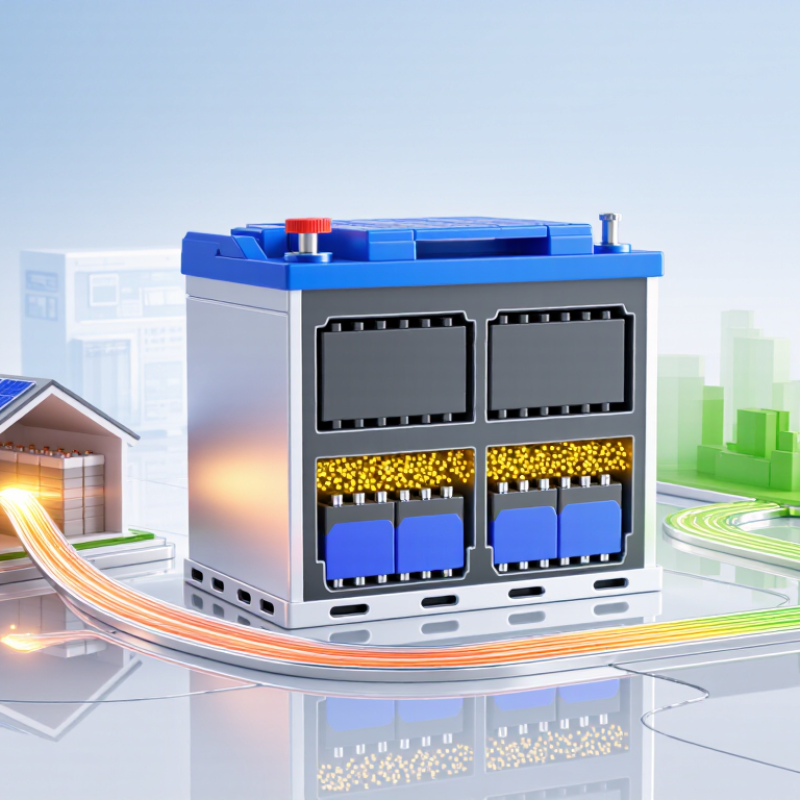
An energy storage battery is a rechargeable system that holds electricity for use later. It stores energy as chemical potential, then releases it as electrical power when connected equipment needs it. A typical setup includes battery cells, a battery management system, wiring, and often an inverter. The cells store energy; control electronics monitor voltage, temperature, and charge levels. These details matter.
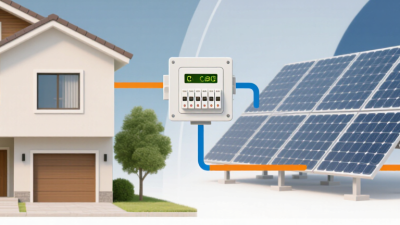
In a home system, the battery may store surplus solar power or electricity drawn from the grid. During discharge, direct current flows from the cells; an inverter can convert it to household alternating current. Capacity, measured in kilowatt-hours, describes stored energy, while power, measured in kilowatts, indicates the delivery rate. Neither number tells the whole story. Usable capacity, temperature, age, and conversion losses affect real performance, and figures can be easy to misread. A battery is not a generator; it shifts energy across time, with some loss.
Tips: Check usable capacity, not just the headline figure. Keep the unit within its specified temperature range and leave ventilation clear. One overlooked point: backup loads need a suitably rated inverter.
An energy storage battery is not one oversized cell; it is a layered system. Inside each cell, electrodes store and release ions through an electrolyte, while a separator limits direct contact. Cells form modules, and modules form racks. Small parts, large consequences. The chemistry, cell format, and spacing affect how much energy fits in a cabinet and how heat moves through it.
A battery management system monitors cell voltage, temperature, and state of charge. It can limit charging when readings move outside safe operating ranges. A power conversion system then changes the battery’s direct current into alternating current for the grid or a building. Cooling equipment, sensors, contactors, and an enclosure support operation. Heat matters. A tidy diagram can make these parts look independent, but they interact; a cooling fault, for example, may prompt the control system to reduce output.
In its 2022 Grid Energy Storage Technology Cost and Performance Assessment, the U.S. Department of Energy uses about 85% round-trip efficiency for a lithium-ion reference case. That figure measures energy returned after charging, not cell efficiency alone. The IEA’s 2024 Batteries and Secure Energy Transitions report says battery storage deployment grew by over 130% in 2023. As systems scale, installation conditions and maintenance still complicate the picture. A specification sheet rarely tells the whole story.
During charging, an external power source pushes electrons into one battery electrode and draws them from the other. Inside the cell, ions move through the electrolyte to balance that charge. In a lithium-ion battery, lithium ions travel toward the graphite electrode and settle between its layers. The process stores energy as chemical potential, not as a tank of electricity. Small details matter: temperature, charging speed, and battery condition can all affect how much energy is retained.
Some energy escapes as heat or through internal resistance. The U.S. Energy Information Administration’s 2024 report, Battery Storage in the United States: An Update on Market Trends, puts the average round-trip efficiency of operating utility-scale batteries at about 82% in 2022. In practical terms, returning 82 units of electricity requires charging with roughly 100 units, on average. That figure describes a fleet, not every battery; chemistry, controls, and operating conditions vary. Charging is not perfectly tidy. A warm battery may lose more energy, and fast charging can increase stress on its materials. Engineers therefore manage current and temperature, while allowing for losses that are easy to overlook.
| Stage or component | What happens | How energy is handled | Important detail |
|---|---|---|---|
| 1. Charging power source | Electricity comes from a source such as the grid, solar panels, or a generator. | The source supplies electrical energy to the storage system. | Solar panels produce direct current (DC); grid electricity is usually alternating current (AC). |
| 2. Power conversion | Power electronics regulate the voltage and current needed by the battery. | An inverter or charger converts and controls power so it is suitable for charging. | Many batteries store and deliver DC electricity. A system connected to an AC grid uses power conversion equipment. |
| 3. Charging a lithium-ion cell | The charger drives lithium ions from the positive electrode toward the negative electrode through the electrolyte. | Electrons travel through the external circuit, while ions move inside the cell; energy is stored as chemical potential. | The electrolyte conducts ions between electrodes but is designed to prevent electrons from passing directly through it. |
| 4. Chemical energy storage | Electrode materials hold energy in a changed chemical state after charging. | The battery stores energy chemically rather than keeping it as a continuous flow of electricity. | Exact reactions and operating limits depend on the battery chemistry. |
| 5. Charge control and safety | A charger and, in many systems, a battery management system monitor voltage, current, and temperature. | Controls adjust or stop charging to keep the battery within its specified operating limits. | Battery management systems can also monitor cell balance and help protect against unsafe operating conditions. |
| 6. Discharging | When electricity is needed, the electrochemical reactions proceed in the opposite direction. | Stored chemical energy becomes electrical energy that can power a device or be converted for a building or grid. | Usable output depends on the battery, its controls, conversion equipment, and operating conditions. |
| How other battery types differ | Lead-acid batteries store energy through reversible reactions involving lead, lead dioxide, and sulfuric acid. Flow batteries store energy in liquid electrolytes circulated through an electrochemical cell. | Both use reversible electrochemical reactions, but their materials and system designs differ from lithium-ion batteries. | Performance, maintenance needs, and suitable applications vary by chemistry and system design. |
| In short: Charging uses electrical energy to drive reversible chemical changes inside a battery. Discharging reverses those changes and releases electrical energy. | |||
When a battery is discharging, chemical reactions move electrons through an external circuit. Those electrons flow from one electrode, pass through a wire and a connected device, then reach the other electrode. That movement creates electric current. Inside the cell, ions travel through the electrolyte to balance the charge. The chemistry and materials vary, but the basic process is similar.
Consider a home storage battery powering a lamp after sunset. The battery supplies direct current, while many household devices use alternating current. An inverter changes the electrical output to suit the home’s circuit. A battery management system monitors conditions such as cell voltage and temperature, and may limit output to protect the cells. It is not magic. It is controlled conversion.
Not every stored watt-hour reaches a device. Some energy becomes heat, and the inverter and wiring also use a small amount. Output can change with temperature, battery age, and how quickly energy is drawn. The simple diagrams often hide these details. That can be misleading. A battery’s stated capacity is useful, but it does not guarantee the same usable energy in every situation. Even a well-designed system has trade-offs. One practical detail is easy to overlook: a high-power appliance may need more current than the battery can safely provide, even when plenty of energy remains.
How it works: A battery stores energy chemically and converts it into electrical energy as it discharges. In this illustrative example, a battery supplies a steady 2 kW load, delivering 2 kWh per hour for five hours—10 kWh in total. Actual output and runtime depend on the battery, inverter, load, and operating conditions.
An energy storage battery stores electricity as chemical energy and releases it when needed. Charging moves ions through an electrolyte between electrodes. During discharge, those ions move back, while electrons travel through an external circuit to power a device. The process is reversible, but not perfectly. Heat, age, and repeated cycling gradually reduce capacity.
Lithium-ion batteries suit electric vehicles, phones, and home storage because they pack substantial energy into relatively little space. Lithium iron phosphate, a lithium-ion chemistry, is often chosen for stationary systems where long cycle life and thermal stability matter. Lead-acid batteries remain useful for vehicle starting and basic backup power, though they are heavy and typically have shorter usable lifetimes. Flow batteries store energy in liquid electrolytes held in tanks, making them a possible fit for larger, longer-duration installations. They are not interchangeable. The best choice depends on cost, space, power needs, and expected cycling.