10 Tips for Choosing Battery Backup for Homes?
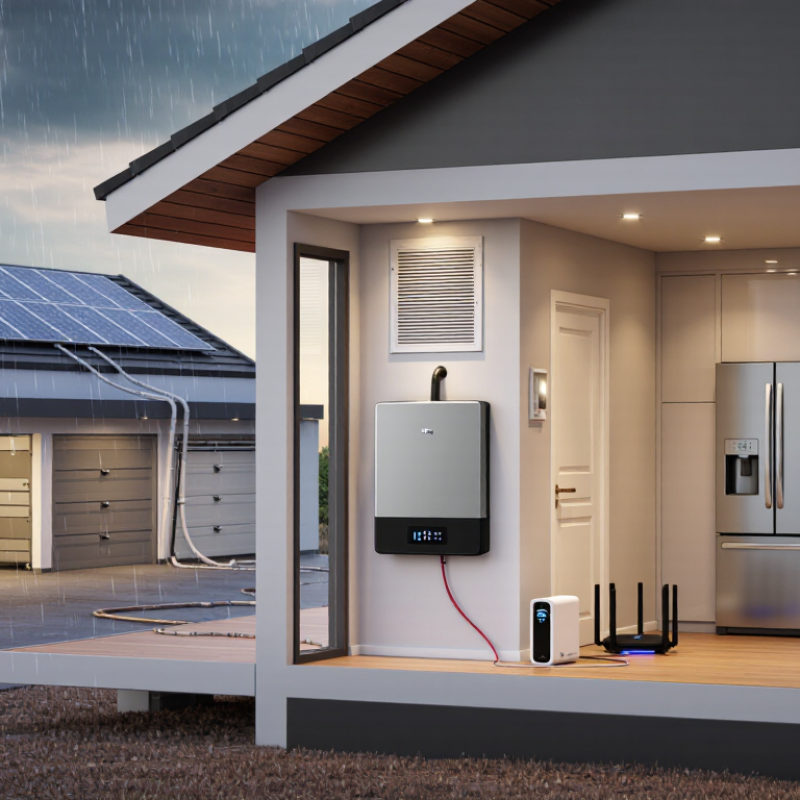
Choosing Battery Back Up For Homes is not simply a matter of buying the largest battery available. A reliable system must match your household’s real habits, electrical loads, and outage risks. During a storm, you may need the refrigerator, Wi-Fi router, lights, and medical equipment running together. A battery that looks powerful on paper may struggle when several appliances start simultaneously. Capacity matters, but so does continuous output.
Dr. Imre Gyuk, a leading energy-storage specialist at the U.S. Department of Energy, has said, “Energy storage is the key to enabling the transition to a clean energy future.” His statement also applies inside ordinary homes. Storage can provide quiet backup, reduce dependence on the grid, and work with rooftop solar. However, the technology is not magic. Battery chemistry, usable capacity, installation quality, ventilation, transfer equipment, warranty terms, and local electrical requirements all deserve careful attention. Small details matter.
This guide presents 10 practical tips for choosing Battery Back Up For Homes. It considers runtime, peak power, installation space, temperature, maintenance, safety, and long-term cost. You will also see why a fridge and router require different planning from an electric water heater. A system may seem affordable until installation and upgrades appear. That is where many buyers miscalculate. I would not pretend every recommendation fits every household. Your climate, budget, panel system, and emergency priorities may change the answer. Use these tips as a careful starting point, then confirm the final design with a qualified installer.
Understanding Your Home’s Backup Power Requirements
Choosing a home battery begins with understanding your backup power requirements, not battery size. The U.S. Energy Information Administration reported roughly six interruption hours per customer in 2023, including major events. The U.S. Department of Energy also found that weather caused 83% of reported outages from 2000 to 2021. These figures support practical planning for storms, heat, and prolonged grid failures.
List essential circuits separately from convenient appliances. Essential loads may include a refrigerator, medical equipment, internet equipment, sump pump, and selected lights. Record each appliance’s running watts, starting watts, and expected daily hours. Add their energy use in watt-hours, then divide by 1,000 for kilowatt-hours. Allow capacity for inverter losses, battery reserve, and colder conditions. Check the inverter’s continuous and surge ratings. A motor can briefly demand several times its normal power. That detail is easy to miss.
Decide how long the battery must operate without charging. Four hours for refrigeration and communications differs greatly from two days for heating controls and water pumps. Consider solar recharge, winter sunlight, installation space, ventilation, transfer equipment, and local electrical requirements. Ask for usable capacity, not only the advertised total capacity. A neat spreadsheet can still mislead when real starting loads are unknown. Test critical circuits with an electrician, and revise the estimate after observing one actual outage. U.S. EIA reliability data and DOE resilience research provide useful context, but each household’s load profile remains different.
Comparing Battery Capacity, Output, and Runtime
Choosing home battery backup begins with three numbers: capacity, output, and runtime. Capacity, measured in kilowatt-hours, shows how much energy the battery stores. Output, measured in kilowatts, shows how much power it can deliver simultaneously. Runtime depends on both figures and your actual household load.
The U.S. Energy Information Administration reports average residential electricity use of about 886 kilowatt-hours monthly. That equals roughly 29 kilowatt-hours daily, but backup systems rarely need to support every appliance. A refrigerator, Wi-Fi router, lights, and medical equipment may require only 1–2 kilowatts together. However, compressor motors can briefly demand more power during startup. Check continuous and surge output, not just the larger headline number.
A simple estimate is runtime equals usable capacity divided by load. A 10-kilowatt-hour battery running a 1-kilowatt load could provide about 10 hours before losses. Real results are lower. NREL’s Storage Futures Study commonly models round-trip efficiency near 85–90%, depending on system conditions. Keep a reserve, too. Emergency charging may be unavailable during extended outages. I have seen homeowners overestimate runtime by counting stored energy as fully usable energy. That shortcut feels reasonable, but it ignores efficiency, temperature, aging, and standby consumption. A cool garage and a dusty filter can quietly change the result. Load testing is worth the effort. Reference: U.S. EIA Residential Energy Consumption Survey; NREL Storage Futures Study.
Evaluating Battery Chemistry, Lifespan, and Safety
Choosing a home battery starts with chemistry, not advertised capacity. Lithium iron phosphate cells usually offer strong thermal stability and long cycle life. The International Energy Agency’s Global EV Outlook 2024 reports that LFP represented about 40% of the global electric vehicle battery market in 2023. That figure does not guarantee better home performance, but it shows growing industry confidence. Nickel-based cells can provide higher energy density, yet they may demand stricter thermal management. Ask for usable capacity, not only the headline number. A smaller, cooler battery can be the wiser choice.
Lifespan should be measured through cycles, calendar years, and retained capacity. The U.S. Department of Energy’s Energy Storage Grand Challenge Roadmap identifies durability, safety, and responsible end-of-life handling as core storage priorities. Request the expected capacity after ten years. Also check the warranty’s temperature limits and replacement conditions. Real homes are messy. A battery beside a hot garage wall will age differently from one in a shaded utility room. I would inspect ventilation, clearance, emergency shutdown access, and installation records before comparing prices. UL 9540A testing evaluates fire-propagation behavior, while NFPA 855 provides installation guidance. Certification is valuable, but it is not a substitute for careful placement. A neat spreadsheet can still mislead. Ask who maintains the system, how faults are reported, and whether local inspectors accept the proposed installation.
10 Tips for Choosing Battery Backup for Homes
Battery chemistry affects usable lifespan, efficiency, thermal behavior, maintenance, and installation requirements. The chart shows representative values commonly reported for residential storage systems; actual performance varies with depth of discharge, temperature, charging rate, and maintenance.
How to interpret the chart: Lithium iron phosphate (LFP) batteries generally provide long cycle life, high efficiency, and better thermal stability than nickel-manganese-cobalt (NMC) batteries. Lead-acid systems typically have lower efficiency and shorter cycle life, but they remain suitable for some low-cost or standby applications.
- Compare usable capacity rather than only the battery’s nameplate capacity.
- Check the manufacturer’s specified cycle life at the stated depth of discharge.
- Prefer a chemistry with sufficient thermal stability for the installation environment.
- Confirm that the battery includes a battery management system and suitable protection devices.
- Review round-trip efficiency because energy losses affect operating costs.
- Verify the battery’s operating temperature range and ventilation requirements.
- Match the continuous and peak power ratings to essential household loads.
- Check warranty terms, including capacity retention and cycle limitations.
- Ensure the inverter, wiring, disconnects, and enclosure comply with local electrical codes.
- Choose a qualified installer and plan for inspection, maintenance, and eventual recycling.
Representative comparison values: lead-acid, approximately 500 cycles and 80% round-trip efficiency; NMC, approximately 2,000 cycles and 90% efficiency; LFP, approximately 4,000 cycles and 92% efficiency.
Checking Installation, Compatibility, and Maintenance Needs
10 Tips for Choosing Battery Backup for Homes
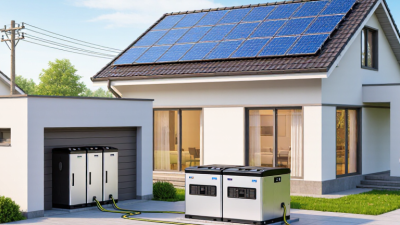
A reliable battery backup starts with a careful installation review. Ask a licensed electrician to inspect the service panel, wiring, grounding, ventilation, and mounting surface. The battery should sit in a dry, accessible area, away from heat and flammable materials. Check local electrical codes and permit requirements before ordering equipment. Do not assume a garage wall is automatically suitable.
Compatibility matters more than advertised capacity. Compare the backup system with your home’s voltage, phase, transfer equipment, and solar configuration. List essential loads, such as refrigeration, medical equipment, lighting, and internet devices. Then calculate their starting and running power. Motors often demand more electricity during startup. A small spreadsheet can expose unrealistic expectations. It is easy to confuse kilowatt capacity with kilowatt-hours of storage.
Maintenance needs deserve equal attention. Confirm inspection intervals, software updates, battery replacement guidance, and emergency shutdown procedures. Keep clear records of installation dates and performance checks. Test the system occasionally under controlled conditions. Carefully. Watch for warning lights, unusual heat, swelling, corrosion, or strange odors, and contact a qualified technician immediately. In my view, the quietest system is not always the best choice; accessible service may matter more. One overlooked cable or blocked vent can reduce reliability. I would also question any product promising effortless, lifetime backup. Homes change, batteries age, and maintenance plans need revision.