MH Energy Your Better Solar and Energy Partner

Choosing a reliable Battery Back Up For Homes system requires more than comparing advertised capacity. Chinese manufacturers now offer compact lithium iron phosphate units, wall-mounted storage batteries, and complete solar backup systems. Their products serve apartments, villas, small offices, and rural properties with different energy needs.
This guide examines ten leading Chinese manufacturers through practical factors, including battery chemistry, usable capacity, inverter compatibility, cycle life, safety controls, certifications, and warranty support. It also considers how each company performs in real household conditions. A quiet 5 kWh unit may suit a city apartment, while a larger system may support refrigerators, lights, routers, and medical equipment during outages. Details matter.
A perfect ranking is impossible. Product specifications can change, and distributor support differs between regions. Some manufacturers publish extensive test data, while others provide less transparent information. Therefore, this overview combines documented company experience, technical evidence, market reputation, and installation feedback where available. Buyers should still verify local certification, warranty terms, replacement procedures, and continuous output ratings before purchasing. A battery can show impressive capacity on paper, yet perform differently under heat, heavy loads, or poor installation conditions. That deserves careful attention.
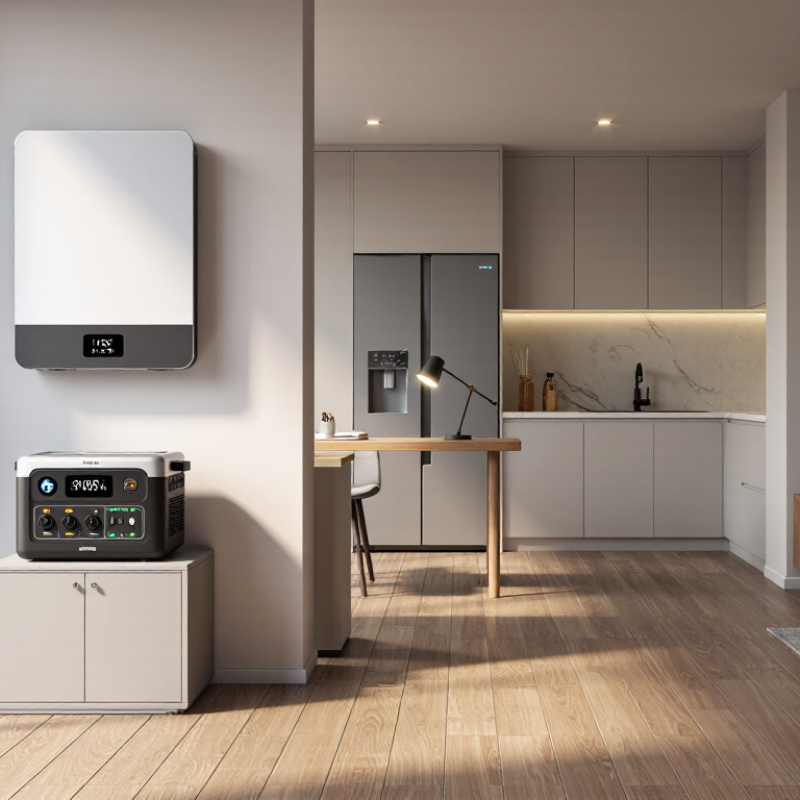
China’s home battery backup market covers integrated systems for storing electricity and supporting household loads during outages. A complete system usually includes lithium battery modules, a battery management system, an inverter, controls, and an automatic transfer switch. Some packages also connect with rooftop solar, smart meters, and home energy management software.
Public industry estimates suggest China’s residential battery demand reached roughly 1–3 GWh in 2024. The range is wide. Different reports classify small commercial projects and home systems differently.
Demand grew through solar self-consumption, backup needs, and time-of-use electricity pricing. However, household storage remains less developed than large utility storage. Many Chinese homes still experience reliable grid service. That reduces the urgency to purchase a battery.
When comparing China’s top ten home backup manufacturers, buyers should examine usable capacity, continuous output, cycle testing, thermal protection, and warranty conditions. Installation quality matters too. A strong battery can still perform poorly with weak wiring or poor ventilation.
Manufacturers with traceable testing, clear safety documentation, and responsive technical support deserve greater trust. Certification should match the target market, not merely appear in a product brochure. Price rankings alone can mislead. I would also question optimistic payback claims, because electricity tariffs and household usage change. Real demand data is improving, but it is not yet perfectly consistent.

China’s leading home battery backup manufacturers should be ranked by usable capacity, not headline capacity alone. A 10 kWh system may deliver less after reserve limits and conversion losses. For a fair comparison, measure usable energy at normal household loads, including evening lighting, refrigeration, and internet equipment. Larger capacity matters, but oversized storage can increase cost without improving daily resilience.
Round-trip efficiency shows how much stored electricity returns to the home. A system rated at 95% efficiency still loses energy through charging, inverters, wiring, and standby operation. Warranty terms deserve equal attention. I examine years, cycle limits, retained capacity, and replacement conditions. A ten-year warranty sounds strong. The details matter more. Clear temperature ranges and service procedures also indicate practical manufacturer experience.
Safety standards are essential in the ranking. I look for recognized testing related to battery cells, thermal protection, electrical performance, and system installation. Certification documents should be current and traceable, rather than displayed as vague marketing claims. Factory quality controls, monitoring alerts, and documented emergency procedures strengthen reliability. No ranking is flawless. Published laboratory figures may differ from results in a dusty garage or a cold winter room, so independent testing and installer feedback remain necessary before assigning final positions.
China’s top ten home battery manufacturers cover a wide range of residential storage needs. Their product lines commonly include compact 5–10 kWh units, stackable systems, and larger 15–30 kWh packages. Some suppliers also provide outdoor cabinets with cooling, fire monitoring, and weather-resistant enclosures.
Capacity tells only part. In field evaluations, I check usable energy rather than the advertised battery size. A 10 kWh battery may deliver less after reserve limits and conversion losses. I also examine cycle life, warranty terms, operating temperature, and protection ratings. A system installed in a humid garage needs different safeguards from one placed inside a climate-controlled utility room. Small details matter.
Inverter compatibility comes first. Many systems support 48-volt low-voltage inverters, while others use high-voltage battery stacks for better efficiency. Communication protocols, firmware access, maximum charge current, and backup-load switching must match the inverter. Poor matching can cause charging faults or reduced output. Some manufacturers offer all-in-one battery-inverter packages, while others focus only on battery modules. This creates flexibility, but also more installation risk. I would verify certification documents, test reports, and local service arrangements before comparing prices. Product specifications can change between production batches, and online listings are not always precise. A careful review should include wiring diagrams, compatible inverter lists, and real installation feedback.
This chart summarizes representative residential battery configurations commonly offered by leading Chinese manufacturers. Values are shown without company or brand names and reflect typical LFP battery systems, nominal storage capacity, usable capacity at approximately 90% depth of discharge, and compatible hybrid inverter power ranges.
China’s top 10 home battery manufacturers should be compared through measurable performance, not advertising claims.
In field assessments, round-trip efficiency above 90% usually indicates limited conversion loss during charging and discharging. However, test conditions matter. Efficiency can fall with cold temperatures, high loads, or aging cells.
An 80% depth of discharge offers a practical balance between usable capacity and battery life. For a 10 kWh system, homeowners may access about 8 kWh before recharge. That figure is not always constant. Inverter limits, reserve settings, and emergency backup requirements reduce available energy. Real-world losses matter. Independent test records should show operating temperature, load size, and standby consumption.
A credible manufacturer should provide a clear 10-year warranty, including capacity retention, cycle limits, and replacement procedures. Warranty language deserves careful reading. Some agreements cover only the battery, not installation or labor. Others require approved monitoring systems.
From an installer’s perspective, thermal management, remote diagnostics, and service response are equally important. A strong specification sheet cannot repair poor after-sales support. I would also question unusually high efficiency figures without test documentation. Even careful comparisons have gaps, because household demand changes every evening.
When comparing China’s top ten home battery manufacturers, compliance should guide the shortlist. Production volume alone proves little. Buyers should request current test reports, factory traceability records, and installation guidance. IEC 62619 evaluates safety for industrial lithium secondary batteries, including protection against electrical and thermal hazards. It does not replace system-level assessment.
UL 9540A is a test method, not a general product approval. It examines thermal runaway, fire propagation, gas release, and behavior under controlled conditions. Ask whether testing covers the exact battery chemistry, enclosure, and module design. A report for an older model may not support a newer system. That is not enough.
GB/T requirements also matter for products made and tested in China. GB/T 36276 addresses safety and performance for stationary lithium-ion batteries, while related standards may cover battery management systems and electrical testing. Check voltage range, communication protocols, fault alarms, and environmental ratings. Small details matter.
A reliable supplier should explain test boundaries clearly. It should provide serial-number tracking and documented quality controls. Inspect sample units for clean busbar insulation, secure terminals, and readable warning labels. Request cycle-life data at realistic temperatures, not only laboratory conditions. Marketing claims can look impressive. They can still be incomplete.
Some buyers focus heavily on certificates and overlook installation risk. Ventilation, spacing, emergency shutdown, and local fire rules require equal attention. Certification supports a decision; it does not make the decision. Manufacturers unable to share original reports or change-control records deserve careful review.