MH Energy Your Better Solar and Energy Partner

Choosing the China Best Solar Electric Battery Storage suppliers requires more than comparing prices and product photos. Solar Electric Battery Storage systems must perform safely through heat, humidity, dust, and frequent charge cycles. A reliable supplier should provide traceable cell sources, documented testing, and clear warranty terms.
Look beyond factory size. Check battery chemistry, usable capacity, cycle-life conditions, inverter compatibility, and battery management system functions. Ask for test reports covering thermal performance, protection controls, and capacity retention. Factory audits can also reveal assembly discipline, quality records, and worker training. These details matter when a system operates beside a home, farm, or commercial building.
Real experience helps. Suppliers with proven projects can explain installation limits, communication protocols, and maintenance needs. Request references from systems with similar climate and load profiles. A strong supplier should answer technical questions directly, not hide behind marketing language. It should also offer responsive after-sales support, replacement procedures, and installation guidance.
No supplier is best for every project. That is worth remembering. A low purchase price may bring higher transport, commissioning, or replacement costs later. Even impressive laboratory data may not predict performance in a poorly ventilated battery room. Buyers should compare complete system value, not only battery capacity. Independent inspection and sample testing add confidence before a large order. Still, budgets and schedules create compromises. The most dependable choice usually combines verified manufacturing experience, transparent documentation, practical engineering support, and honest communication about limitations.

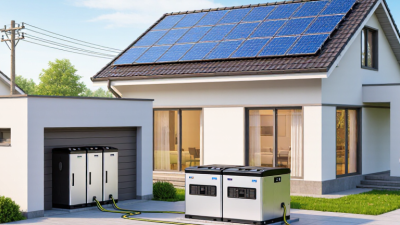
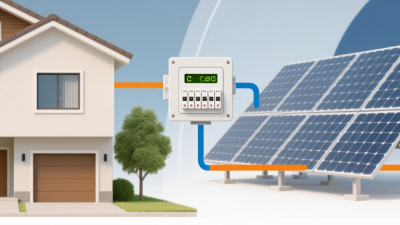
Solar electric battery storage systems capture excess electricity from photovoltaic panels and release it when sunlight fades. A typical system includes solar modules, an inverter, a battery pack, a battery-management system, and monitoring controls. The inverter changes direct current into household alternating current. It also controls charging, discharging, and grid interaction.
Most modern systems use lithium-ion batteries because they offer high energy density and strong round-trip efficiency. However, performance depends on temperature, charging speed, depth of discharge, and installation quality. The U.S. Department of Energy explains that battery capacity is measured in kilowatt-hours, while power is measured in kilowatts. This distinction matters. A 10-kilowatt-hour battery may not operate a large motor for long. It stores energy, but it does not automatically provide high power.
Storage can reduce evening grid purchases, support backup loads, and improve solar self-consumption. The International Energy Agency reported in Batteries and Secure Energy Transitions 2024 that global energy storage capacity must expand sixfold by 2030 in its net-zero pathway. That growth reflects rising renewable generation and greater demand for flexible electricity. Yet a neat specification sheet can mislead. Actual results vary with household load patterns, local weather, tariffs, and battery ageing. Buyers should compare usable capacity, continuous output, warranty conditions, safety testing, and expected cycle life. Sometimes, a smaller system performs better because it matches real consumption.
China Best Solar Electric Battery Storage Suppliers?
How to Evaluate Chinese Battery Storage Suppliers
Choosing a Chinese battery storage supplier requires more than comparing prices. The International Energy Agency reported that global battery storage additions reached about 42 GW in 2023, nearly doubling in one year. This growth creates more options, but also uneven quality. Ask for verified cell test records, system efficiency data, cycle-life conditions, and documented degradation curves. A “10,000-cycle” claim means little without temperature, depth-of-discharge, and charging-rate details.
Safety evidence should be practical and traceable. Review testing against IEC 62619, IEC 63056, and relevant grid-connection standards. Request thermal propagation results, emergency shutdown logic, fire-control design, and software update procedures. The International Renewable Energy Agency notes that storage economics depend heavily on round-trip efficiency, replacement costs, and operating conditions. Therefore, compare lifetime energy delivered, not only the purchase quotation. Factory capacity also needs checking. A polished video is not proof. An on-site audit, production sample, and customer reference are stronger evidence.
Tips: Build a supplier scorecard before requesting offers. Include cell origin, warranty exclusions, spare-part availability, response time, and local service capability. Ask for an independently witnessed factory acceptance test. Check whether the warranty covers capacity retention under your actual climate. A cheap system may become expensive after integration. I would still leave room for doubt: published performance often reflects laboratory conditions, not dusty sites, weak grids, or daily cycling. Evaluate the evidence twice.
| Evaluation Dimension | What to Compare | Reliable Reference Data or Evidence | Documents and Verification Methods | Suggested Weight |
|---|---|---|---|---|
| Battery Chemistry | Cell chemistry, thermal stability, usable depth of discharge, and suitability for daily solar cycling. | Lithium iron phosphate (LFP) is widely used in stationary storage because it generally offers strong thermal stability and long cycle life. Compare the supplier’s stated usable energy rather than only nominal capacity. | Request the cell datasheet, battery datasheet, warranty assumptions, depth-of-discharge limits, and independent test reports. | 10% |
| Usable Energy and Power | Nominal capacity, usable capacity, continuous power, peak power, round-trip efficiency, and power factor capability. | For a fair comparison, calculate usable energy as nominal energy × permitted depth of discharge. Confirm whether efficiency figures include the battery management system, inverter, transformer, and auxiliary loads. | Review a complete system datasheet and request a performance curve at different temperatures, charge rates, and state-of-charge levels. | 10% |
| Cycle Life and Warranty | Cycle-life test conditions, annual throughput, calendar-life limits, retained capacity, and warranty exclusions. | Cycle-life figures are meaningful only when the test temperature, charge/discharge rate, depth of discharge, beginning-of-life capacity, and end-of-life capacity are stated. A common end-of-life definition is 70% or 80% retained capacity, depending on the warranty. | Request the full warranty, degradation schedule, throughput limit, operating-temperature requirements, and claim procedure. | 12% |
| Safety Certifications | Cell, module, rack, battery system, and energy-storage installation certifications applicable to the destination market. | Relevant standards may include IEC 62619 for industrial lithium secondary cells and batteries, UL 1973 for stationary battery systems, and UL 9540 for energy-storage systems. The applicable requirement depends on the country and system architecture. | Verify certificate numbers, product models, issuing laboratories, scope, expiration status, and whether the certificate covers the exact supplied configuration. | 15% |
| Thermal Runaway Testing | Propagation resistance, gas release, fire protection, venting, detection, and emergency shutdown design. | UL 9540A is a test method used to evaluate thermal-runaway fire propagation characteristics. A test report is not automatically the same as system certification and should be reviewed with the local authority having jurisdiction. | Request the complete UL 9540A report, hazard analysis, fire-protection design, alarm logic, emergency-response instructions, and installation clearances. | 15% |
| Transportation Compliance | Transport classification, packaging, labeling, shipping mode, and dangerous-goods documentation. | Lithium batteries shipped internationally normally require UN 38.3 testing and transport documentation. Additional requirements can apply under the rules of air, sea, road, and rail transport. | Request the UN 38.3 test summary, safety data sheet, dangerous-goods declaration, packing instructions, and shipment history for the target region. | 8% |
| Manufacturing Quality | Traceability, incoming inspection, cell matching, end-of-line testing, process controls, and nonconformance handling. | A mature quality system should provide serial-number traceability from cell batch to finished rack, documented inspection plans, and defined corrective-action procedures. ISO 9001 certification can support, but does not replace, product-quality verification. | Conduct a factory audit, review sample inspection records, check calibration certificates, and require a quality-control plan for the purchase order. | 12% |
| Battery Management System | Cell monitoring, balancing, state-of-charge estimation, over-temperature protection, communications, and event logging. | The BMS should provide protection against overcharge, over-discharge, overcurrent, short circuit, and abnormal temperature. Confirm the number of monitored cells, sampling frequency, and independent protection layers. | Review the BMS functional description, communication protocol list, alarm matrix, firmware-change policy, cybersecurity controls, and remote-access permissions. | 10% |
| System Integration | Compatibility with the solar inverter, energy-management system, microgrid controller, monitoring platform, and utility requirements. | Common interfaces include CAN, RS-485, Modbus TCP, and other documented protocols. Compatibility must be confirmed at the complete-system level, not only at the battery-pack level. | Request an approved-inverter list, interface control document, commissioning procedure, communication register map, and site acceptance test plan. | 8% |
| Environmental Performance | Operating temperature, humidity, altitude, ingress protection, corrosion resistance, noise, and derating conditions. | Performance can change significantly outside the rated temperature range. Outdoor systems should have an appropriate IP rating, climate-control strategy, and documented power derating at high or low temperatures. | Review environmental test reports, IP test evidence, altitude limits, HVAC energy consumption, installation manual, and regional climate assumptions. | 5% |
| Supplier Financial and Production Capacity | Manufacturing location, production capacity, cell-sourcing strategy, order backlog, financial stability, and ability to support replacement units. | Production capacity should be supported by identifiable facilities, equipment, staffing, and recent shipment records rather than marketing claims alone. Evaluate the supplier’s ability to maintain spare parts over the expected project life. | Use a factory visit, audited financial information where available, production records, reference-site calls, and a formal business-continuity plan. | 5% |
| Delivery and After-Sales Service | Lead time, commissioning support, spare-parts availability, response time, local service coverage, and training. | For international projects, total delivery time includes production, factory acceptance testing, dangerous-goods documentation, customs clearance, ocean or air freight, and site commissioning. | Include service-level agreements, response-time commitments, spare-parts lists, training scope, escalation contacts, and liquidated damages in the contract. | 5% |
China’s solar battery storage sector includes several distinct manufacturer types. Cell specialists produce lithium iron phosphate batteries for safer, longer daily cycling. Integrated energy-storage manufacturers combine cells, inverters, battery management systems, and cooling equipment. Their packaged systems can simplify installation and commissioning.
OEM and ODM factories serve distributors that need customized cabinets, labels, communication protocols, or enclosure sizes. Residential suppliers usually focus on compact wall-mounted batteries and hybrid inverter compatibility.
Commercial and industrial manufacturers build larger rack systems for factories, offices, and farms. Utility-scale producers offer containerized storage with fire monitoring and remote controls. Each type requires different testing evidence.
Tips: Ask for recent cycle-test records, protection settings, and independent safety certificates. Check whether the supplier controls cell quality or simply assembles imported parts. Request a sample system before placing a large order. Inspect welding, cable routing, connectors, and software alarms. A clear warranty should define capacity retention, operating temperature, and service response. Factory audits can reveal weak packaging or inconsistent documentation. Do not judge quality by price alone. I have seen attractive specifications fail during communication testing. That lesson matters. Verify transport packaging, spare-part availability, and after-sales engineers before approval. A reliable supplier explains limitations openly, including reduced output in cold conditions and slower charging near full capacity.
Choosing a solar battery requires more than comparing prices. Lithium iron phosphate batteries usually offer strong safety, long cycle life, and stable daily performance. Lead-acid systems cost less initially, but they often need more space and tolerate fewer deep discharges. Nickel-based lithium batteries can provide high energy density, yet their thermal management requirements deserve careful review. Technology should match the site, not the sales brochure.
Capacity must be measured in usable kilowatt-hours, not only the advertised figure. A 10 kWh battery may deliver less energy after reserve limits and conversion losses. Check round-trip efficiency, continuous output, peak output, and charge speed. A household with a 5 kW evening load needs more than adequate storage; it also needs sufficient discharge power. Small details matter. Ask for cycle-life test conditions, operating temperature ranges, warranty terms, and independent safety certifications. Performance claims without test methods are difficult to trust.
Supplier evaluation should include factory quality controls, traceable cell sourcing, software support, and replacement procedures. Request operating data from comparable installations, preferably across hot and cold seasons. A spreadsheet rarely tells the whole story. Real performance can change with shading, installation quality, and user habits. One useful improvement is leaving a clear reserve for cloudy days, although that reduces daily savings. The best comparison remains imperfect, so record assumptions before selecting a system.
China Best Solar Electric Battery Storage Suppliers?
What to Check Before Purchasing from a Chinese Supplier
Choosing a Chinese battery storage supplier requires more than comparing prices. Ask for company registration, factory ownership details, and recent export records. A polished showroom proves little. Request a live production video or arrange an independent factory inspection.
Check the battery cells, BMS design, inverter compatibility, and thermal management system. Ask how each cell batch is tested before assembly. Reliable suppliers should provide test reports, serial-number tracking, and clear performance limits. Review cycle-life data under realistic conditions, not only laboratory claims. A 10 kWh unit may deliver less usable energy after reserve settings and conversion losses.
The warranty deserves close attention. Confirm coverage length, response times, replacement procedures, and shipping responsibilities. Ask who handles failures after installation. Written answers matter. I have learned that vague promises create expensive delays. Also verify required safety certificates and grid standards for your installation location. Documents should match the exact model, not a similar product. If possible, order one sample first and monitor temperature, charging speed, noise, and software stability for several weeks. Small problems often appear later. Do not ignore them. A supplier that accepts technical questions calmly is usually easier to work with than one that only pushes for fast payment.
Use these chemistry benchmarks when reviewing a supplier’s technical documents. Lithium iron phosphate (LFP) batteries commonly provide a longer cycle-life range than nickel manganese cobalt (NMC) batteries, but actual performance depends on depth of discharge, temperature, charging limits, system design, and maintenance.
Before purchasing, request independent test reports, cell traceability, warranty terms, battery-management-system specifications, factory quality records, and relevant safety documentation such as UN 38.3 transport testing and applicable IEC or UL standards. The ranges shown are typical industry reference values, not supplier guarantees.