How to Choose the Right Solar Energy System for Your Home?
Choosing the right solar energy system for your home is crucial in today's eco-conscious world. As of 2023, the solar energy market has witnessed a remarkable growth of over 30% annually. This surge reflects a growing interest in renewable energy solutions. Many homeowners now seek ways to reduce their carbon footprint and cut energy costs.
Understanding the options available is essential. Not every solar energy system home is the same. Variations exist in efficiency, installation costs, and maintenance. A recent industry report indicates that installing solar panels can lead to savings of up to $20,000 over 25 years. However, these systems can also vary significantly in quality. It’s important to select a reliable brand and understand your home's energy needs.
Moreover, not all homes are suited for solar energy systems. Factors like roof orientation, local climate, and available space can affect performance. Some may invest in a system without accounting for these variables. This can lead to underwhelming results and unmet expectations. Thorough research is necessary to make the best decision. Solar energy is a powerful tool for sustainability, but careful consideration is key.
Understanding Your Home's Energy Needs
When choosing a solar energy system, it’s crucial to understand your home's energy needs. Begin by analyzing your electricity bills. Look for patterns in your usage across different months. Recognizing peak usage times will give you insight into how much energy you need. Do you have a lot of devices? Consider their energy consumption. Smaller devices can add up over time.
Next, think about your home’s size and layout. Larger homes typically require more solar panels. However, layout impacts efficiency. A roof with limited sunlight exposure might not generate sufficient power. You may also have to account for seasonal changes in energy needs. Winter months usually require more heating, so energy consumption could rise.
Collecting this information can be overwhelming. You might find it difficult to predict future changes, like adding new appliances or moving home. It's okay to be uncertain. Start with a rough estimate and let providers guide you. They can suggest an appropriate system size based on your current needs. Remember, the goal is to balance efficiency and budget.
Types of Solar Energy Systems Available
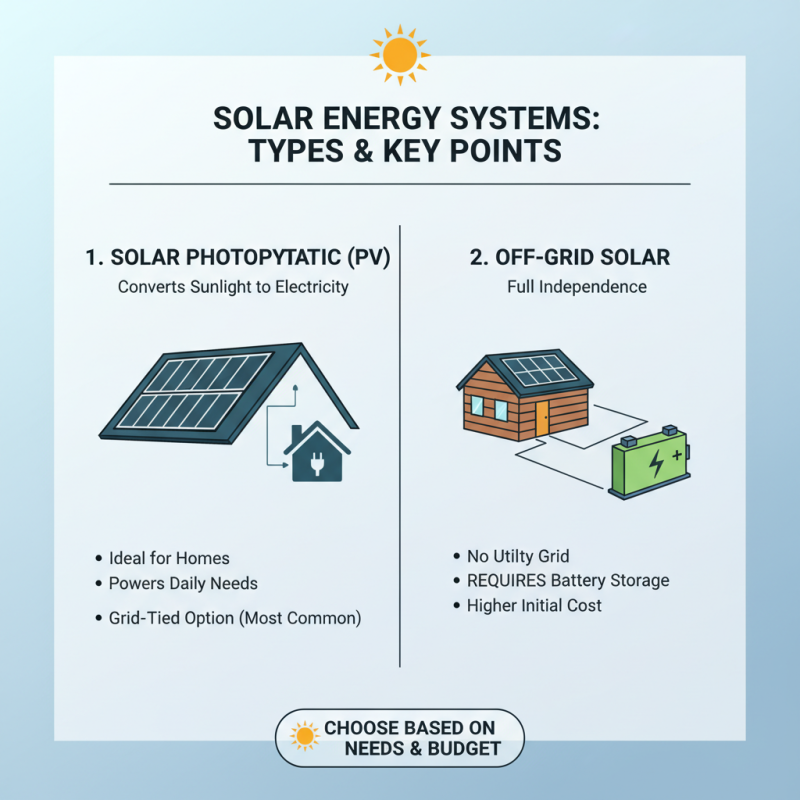
When considering a solar energy system, knowing the types available is crucial. Solar photovoltaic (PV) systems convert sunlight into electricity using solar panels. These systems work well for residential homes. They can supply energy for everyday needs. Some homeowners choose off-grid solar systems. These systems provide complete independence from the utility grid. However, they require a battery storage solution, which can be costly.
Solar thermal systems are another option. They use sunlight to heat water or air for home use. These systems are ideal for homes needing hot water. They can also reduce energy bills significantly. However, their effectiveness depends on local climate conditions. Some regions may not get sufficient sunlight year-round.
One can also explore community solar programs. These allow homeowners to share a solar installation. They can benefit from renewable energy without having panels on their roofs. Yet, access might be limited in certain areas. Each type of solar energy system has its pros and cons. It is essential to evaluate personal needs and circumstances before making a decision.
Evaluating Cost and Financial Incentives
When considering a solar energy system for your home, costs and financial incentives play a vital role. Start by calculating the installation costs. This includes equipment, labor, and potential permits. Many homeowners underestimate the total expenses involved. It's essential to assess your budget accurately and be ready for some surprises.
Next, explore financial incentives. Federal and state programs can significantly reduce your upfront costs. For instance, tax credits and rebates often apply. These can make solar installation more accessible. Research local options thoroughly. Some areas have unique incentives, while others may offer no help at all. This variability can impact your decision significantly.
Think about payback periods as well. Typically, solar systems take several years to repay their initial cost. However, savings on utility bills can offset this. You may wonder if the long-term benefits are worth it. Make sure to weigh the pros and cons carefully. Don’t forget to check your energy consumption patterns. This data can provide insights into your solar needs.
Cost Comparison of Different Solar Energy Systems
This bar chart illustrates the average costs of different types of solar energy systems per watt. Monocrystalline panels tend to be the most expensive, while thin-film panels offer a more economical option.
Assessing Installation Requirements and Space
When assessing installation requirements, consider your roof's condition and orientation. A
south-facing roof typically maximizes sunlight exposure. An ideal angle is between
30 and 45 degrees for optimal performance. Professional assessments suggest that roofs over ten years old might need repairs before installation.
Space availability is crucial. Solar panels require ample area. Systems often need around
100 to 200 square feet per panel. However, not all homes have this luxury.
Trees and nearby buildings could cast shadows, reducing efficiency. A 2020 report indicated that shaded panels produce up to
25% less energy.
Another factor is local regulations. Some areas may have restrictions on solar installations. Understanding these can prevent wasting time and resources.
The average installation process takes two to three months, but delays may occur from permits or inspections.
Being clear on your space and installation requirements can lead to better choices.
Choosing a Reliable Solar Provider and Installation Team
Choosing the right solar provider and installation team is critical for a successful solar energy system. A reliable provider can significantly impact your experience. According to a Solar Energy Industries Association (SEIA) report, the right installation team can improve efficiency by up to 30%. This emphasizes the importance of thorough research.
When selecting a provider, check their credentials. Licensing and insurance are non-negotiable. Ask about their experience with similar projects. A good installer should be transparent about their process. They should provide an accurate quote and timeline. Look for customer reviews to gauge satisfaction.
Tips:
Seek recommendations from friends or local forums. This can lead to trusted providers. Also, request multiple quotes to compare. Don’t rush the decision; it's okay to take your time. Trust your instincts. If something feels off during discussions, reconsider.
Not every provider will meet your needs. Some may push you towards larger installations than necessary. Watch for high-pressure sales tactics. Remember that solar panel technology varies. It’s not only about cost; efficiency matters too. Aim for a balance between cost and quality.