MH Energy Your Better Solar and Energy Partner

Leave Your Message
MH Energy Your Better Solar and Energy Partner
Choosing the 2026 Best Off Grid Solar Power System requires more than comparing panel wattage or battery capacity. Global buyers need evidence, not attractive brochures.
The World Bank’s Tracking SDG 7 report recorded approximately 685 million people without electricity in 2022. This gap keeps reliable, decentralized energy highly relevant. IRENA’s Renewable Capacity Statistics 2025 reported 585 gigawatts of renewable capacity added worldwide in 2024. Solar power represented the largest share of new capacity. These figures show strong momentum, but they do not guarantee suitable performance in every location.
Climate changes everything. A system operating beside a dusty Kenyan road faces different risks from one serving a cold Mongolian cabin. Humidity, salt air, battery temperature, shading, maintenance access, and local technician skills must shape the specification. The IEA’s Renewables 2024 analysis also highlights continued solar growth, supported by falling costs and wider deployment. Yet, cost reductions can hide weaker components or limited after-sales support.
A practical Off Grid Solar Power System should match daily loads, seasonal sunlight, backup needs, and future expansion. It should include transparent efficiency data, protection ratings, warranty conditions, battery cycle information, and tested safety certifications. Small details matter.
A perfect system rarely exists.
Buyers should question unrealistic autonomy claims, unclear test methods, and oversized battery promises. This guide compares system architecture, storage chemistry, inverter quality, monitoring features, installation requirements, and long-term serviceability. Some recommendations may remain imperfect because field conditions differ. That limitation deserves honest attention, not marketing language.

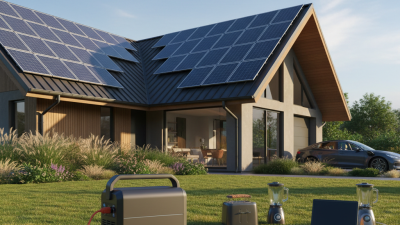
An off-grid solar power system generates and stores electricity without relying on a public utility grid. Solar panels capture sunlight, while a charge controller protects the battery during charging. The battery supplies power after sunset or during cloudy hours. An inverter converts stored DC electricity into AC power for appliances. Some systems also include a backup generator, but solar remains the primary source.
The World Bank’s Tracking SDG 7 report estimated that 685 million people lacked electricity access in 2022. This explains the growing role of off-grid systems in remote homes, farms, clinics, and small businesses. IRENA reports that decentralized renewable systems can reduce connection barriers in isolated regions. However, the term “off-grid” is not perfectly standardized. A small cabin system differs greatly from a commercial microgrid. Buyers should examine daily energy demand, peak loads, battery capacity, local sunlight, and replacement conditions. One mistake is sizing panels only for sunny weather.
Tips: List every appliance first. Record its wattage and daily operating hours. Add extra capacity for cloudy days and battery aging. Check temperature ratings, warranty terms, safety certifications, and service availability. A practical design should power essential loads before luxury appliances. Lights, refrigeration, communications, and water pumps often deserve priority. Ask for measured performance data, not only promotional estimates. A system can look affordable but perform poorly when batteries are undersized. The best choice is rarely the largest one.
| System Dimension | What It Is | Typical Specification or Range | Primary Function | Global Buyer Considerations | Practical Selection Guidance |
|---|---|---|---|---|---|
| System Definition | An off-grid solar power system is a stand-alone electricity system that operates independently of a public utility grid. | Solar generation, battery storage, charge control, power conversion, protection, and distribution equipment. | Supplies electricity to homes, cabins, farms, telecommunications sites, and other locations without reliable grid access. | System design must match local solar conditions, electrical standards, climate, and load requirements. | Begin with an energy audit rather than selecting equipment based only on the solar-panel rating. |
| Solar Array | A group of photovoltaic modules that converts sunlight into direct-current electricity. | Common small-system sizes range from approximately 1 kW to 10 kW; larger rural and commercial systems may exceed 10 kW. | Produces energy during daylight hours and recharges the battery through the charge controller or inverter-charger. | Output varies with sunlight, module orientation, temperature, shading, dust, and seasonal weather. | Allow sufficient array capacity to supply daytime loads and replace the energy used from storage. |
| Battery Bank | A storage unit that holds solar energy for use at night or during cloudy periods. | Common system voltages include 12 V, 24 V, and 48 V; 48 V is often more efficient for larger residential systems. | Provides energy when solar production is low and helps manage short-term changes in demand. | Battery chemistry, operating temperature, usable capacity, maintenance needs, and transport regulations differ by market. | Size the battery according to daily consumption, required backup days, allowable depth of discharge, and expected temperature. |
| Battery Chemistry | The electrochemical technology used for energy storage. | Common options include lead-acid and lithium iron phosphate; usable capacity depends on the selected technology and operating limits. | Determines storage efficiency, cycle life, weight, maintenance, and installation requirements. | Lead-acid batteries generally require more ventilation and maintenance; lithium-based systems require a compatible battery-management system. | Compare total lifetime cost and operating conditions instead of comparing purchase price alone. |
| Charge Controller | An electronic device that regulates the voltage and current from the solar array to the battery. | Pulse-width modulation and maximum-power-point-tracking designs are widely used; voltage and current ratings must match the array and battery. | Protects the battery from overcharging and can improve energy harvest under changing solar conditions. | Cold-weather open-circuit voltage and hot-weather current ratings must be considered during design. | For variable weather, long cable runs, or higher-power systems, a correctly sized maximum-power-point-tracking controller is often beneficial. |
| Inverter | A power converter that changes battery direct current into alternating current for standard appliances. | Typical residential off-grid systems use 120 V or 230 V alternating-current output, depending on the destination market. | Runs household appliances and may provide charging, monitoring, transfer, and generator-integration functions. | Output voltage, frequency, waveform, surge rating, and local certification requirements vary by country. | Choose a pure-sine-wave inverter for sensitive electronics, motors, pumps, refrigeration, and medical equipment. |
| Continuous Power | The power level the inverter can deliver for normal operation. | Small systems may use 1–3 kW; typical whole-home systems may require approximately 5–15 kW, depending on the loads. | Determines how many appliances can operate simultaneously. | High-power appliances such as electric heating, water heaters, and large pumps can substantially increase system size. | Add the running wattage of simultaneous loads and maintain a design margin for future demand. |
| Surge Power | The temporary power an inverter can provide when equipment with a motor or compressor starts. | Often several times the running power for a short period, depending on the inverter and appliance design. | Allows refrigerators, pumps, power tools, and other inductive loads to start correctly. | Actual starting demand depends on motor type, appliance efficiency, ambient temperature, and mechanical load. | Check the starting requirement of every motor-driven appliance before finalizing inverter capacity. |
| Energy Autonomy | The period the system can supply essential loads without meaningful solar production. | Many designs target approximately 1–3 days of autonomy; critical installations may require more. | Maintains service during storms, winter conditions, or several days of cloud cover. | More autonomy increases battery capacity, cost, weight, and installation space. | Use priority loads and a backup generator when continuous availability is required at a reasonable cost. |
| Daily Energy Demand | The total electricity consumed by all loads over a typical day. | Calculated in watt-hours or kilowatt-hours per day by multiplying appliance power by operating time. | Forms the basis for sizing the solar array, battery bank, and inverter. | Seasonal demand can change because of heating, cooling, irrigation, refrigeration, or lighting needs. | Record actual appliance usage and include conversion losses, standby consumption, and future loads. |
| Solar Resource | The amount of usable sunlight available at the installation location. | Usually evaluated using peak-sun-hours data, which varies by latitude, season, weather, and shading. | Determines the expected daily energy production of the solar array. | Two sites in the same country may have significantly different solar output because of climate and terrain. | Use location-specific monthly solar data and design for the lowest-production season, not only the annual average. |
| System Efficiency | The proportion of solar energy that remains available after conversion, wiring, charging, and storage losses. | Overall performance depends on component efficiency, temperature, cable length, battery condition, and operating mode. | Influences the amount of solar capacity required to meet the same energy demand. | Very high temperatures, poor ventilation, undersized cables, and partial shading can reduce output. | Use correctly sized conductors, adequate ventilation, proper protection, and regular maintenance to reduce losses. |
| Backup Generator | An optional fuel-powered generator used when battery reserves are low or demand is unusually high. | Rated according to essential loads and the charging capability of the inverter-charger. | Provides resilience during extended cloudy weather, emergencies, or seasonal demand peaks. | Fuel availability, noise, emissions, maintenance, and local regulations affect suitability. | Use automatic start only when compatible controls, safety devices, ventilation, and fuel systems are properly installed. |
| Protection and Safety | Devices and installation practices that protect people and equipment from electrical faults and environmental hazards. | May include fuses, circuit breakers, disconnects, grounding, surge protection, battery isolation, and fire-safety measures. | Limits damage from short circuits, overcurrent, lightning, incorrect wiring, and battery faults. | Requirements differ according to national electrical codes, building rules, and battery type. | Use qualified electrical installation and equipment certified for the destination market. |
| Environmental Conditions | The temperature, humidity, dust, wind, rain, snow, and salt exposure at the installation site. | Equipment should be selected according to its stated operating temperature, ingress protection, and mounting requirements. | Supports reliable operation and helps prevent premature component aging. | Desert dust, coastal corrosion, high humidity, freezing temperatures, and heavy snow require different design measures. | Review enclosure ratings, corrosion resistance, ventilation, mounting strength, and battery temperature limits. |
| Monitoring and Controls | Hardware and software used to track energy production, battery state, load consumption, and system alarms. | May include local displays, data logging, remote connectivity, and battery-management communication. | Helps identify low battery levels, abnormal production, overloads, and maintenance needs. | Remote locations may have limited internet or mobile coverage, so local monitoring should remain available. | Select monitoring that records production, consumption, battery status, fault history, and system performance. |
| Maintenance Needs | Routine work required to keep the system operating safely and efficiently. | May include panel cleaning, cable inspection, ventilation checks, firmware updates, and battery inspections. | Preserves output, safety, and expected service life. | Maintenance frequency depends on dust, snow, humidity, wildlife, access, and battery technology. | Prepare a maintenance schedule and ensure replacement parts and technical support are accessible locally. |
| Best Application | Locations and uses for which an independent solar-storage system is technically and economically suitable. | Remote homes, agricultural facilities, cabins, emergency shelters, telecommunications, lighting, and water pumping. | Provides energy where grid connection is unavailable, unreliable, or expensive to extend. | Large electric heating loads and energy-intensive industrial processes may require substantial generation and storage. | Prioritize efficient appliances, load management, and essential circuits to improve system affordability and reliability. |