MH Energy Your Better Solar and Energy Partner

The 2026 market for Solar And Battery Storage is becoming more practical, but buyer decisions remain highly local. Rooftop panels, hybrid inverters, and lithium iron phosphate batteries now work as one household energy system. A typical installation may charge at noon, power a heat pump after sunset, and preserve backup capacity overnight. However, equipment quality, installer experience, electricity tariffs, and battery warranties can change the financial result.
The International Energy Agency’s Renewables 2024 report expects global renewable capacity to expand rapidly through 2030. Its Batteries and Secure Energy Transitions report also identifies batteries as essential for integrating variable solar power. IEA Executive Director Fatih Birol stated, “Batteries are a key part of the clean energy transition.” This view reflects grid evidence, not only marketing optimism. SolarPower Europe’s Global Market Outlook 2024–2028 also shows continued solar deployment, although growth rates may vary across regions.
This guide evaluates the 2026 systems buyers are most likely to consider. It compares usable capacity, round-trip efficiency, degradation protection, inverter design, safety features, monitoring software, and service support. A larger battery is not automatically better. Oversizing can increase cost while leaving capacity unused. Forecasts can also miss policy changes, export limits, and unusual electricity prices. That matters.
Reliable buying decisions should combine manufacturer specifications with independent testing and local installer estimates. Look for documented certifications, transparent warranty terms, and realistic backup claims. A careful buyer should ask what happens during cloudy winter days, grid outages, and future battery replacement. The best system is not always the most powerful one. It is the system that fits the home, budget, climate, and daily electricity pattern.
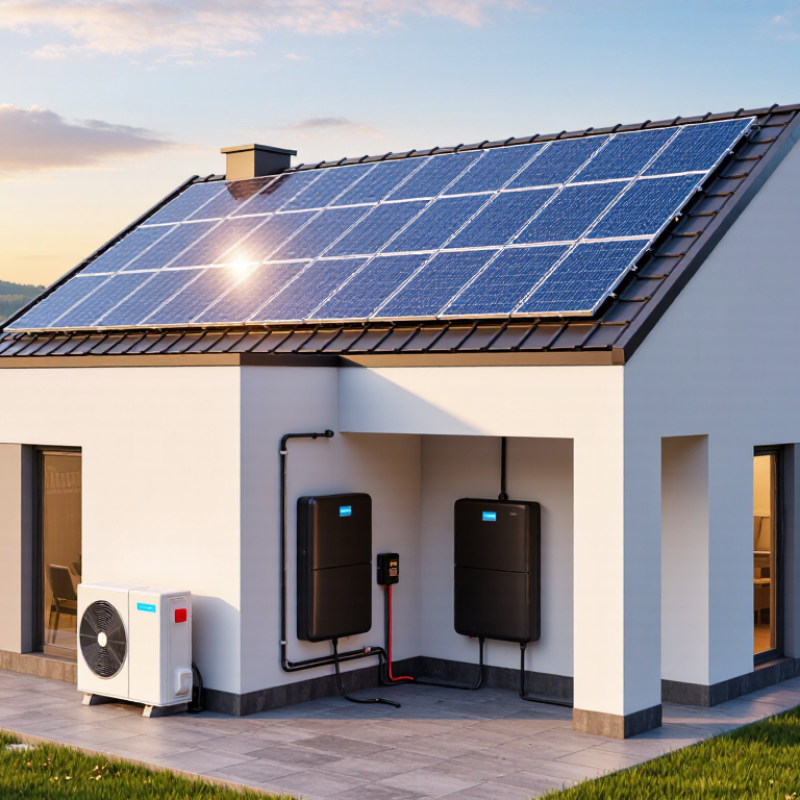
Solar and battery storage systems are no longer simple add-ons. Buyers must match production, storage, and household demand. A larger battery does not always deliver greater savings. Usable capacity, round-trip efficiency, degradation, and backup limits matter more than headline size.
The International Energy Agency reports that global battery storage capacity must expand sixfold by 2030. This reflects growing renewable generation and evening electricity demand. NREL’s 2024 Annual Technology Baseline also shows that battery costs vary with system duration, installation conditions, and financing. Ask for a written estimate using your actual hourly consumption. Monthly averages can hide important details.
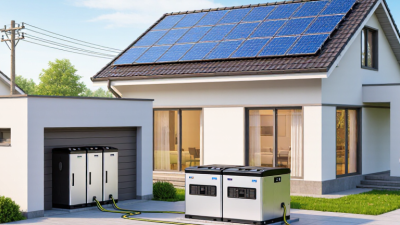
A practical system may charge at noon and power lights, refrigeration, and internet equipment after sunset. During outages, essential-load circuits usually perform better than whole-home backup. Check warranty terms, expected cycle life, temperature limits, fire protection, and local interconnection requirements. Independent testing and qualified installation deserve attention.
The numbers can disappoint.
Payback periods depend heavily on tariffs, export rules, incentives, and battery replacement costs. The U.S. Energy Information Administration continues to document strong regional differences in electricity prices and storage deployment. A system that works well in a sunny home may underperform in a shaded property with low evening demand. Buyers should compare at least three scenarios: no battery, partial backup, and full backup. Forecasts are useful, but they are not promises.
Typical battery characteristics help buyers compare how much stored energy can be used and how efficiently a system can deliver it back to the home.
Representative technical values: lithium iron phosphate and nickel manganese cobalt systems generally provide higher usable capacity and efficiency than lead-acid systems. Actual specifications vary by product, temperature, operating conditions, and installation design.
Reference: U.S. Department of Energy, Energy Saver guidance on home battery storage; values shown are typical industry ranges represented as comparison points.
Solar panels and battery storage work as a daily energy team. Panels generate electricity under sunlight, while an inverter converts it for household use. Extra power charges the battery instead of flowing immediately to the grid. After sunset, stored energy can run lights, refrigeration, and internet equipment. The timing matters. According to the IEA’s Renewables 2024 report, solar photovoltaic systems represented 75% of global renewable capacity additions in 2023. More solar also means more midday surplus to manage.
Battery size should match real household demand, not panel size alone. A home using 10 kWh each evening may need a battery with more than 10 kWh of usable capacity. Charging losses, reserve settings, and cold temperatures reduce available energy. NREL’s 2024 Annual Technology Baseline models approximately 85% round-trip efficiency for lithium-ion storage. That difference becomes visible on a winter bill. A larger battery is not automatically better. It may sit underused for much of the year, which weakens the financial case.
Tips: Review twelve months of electricity bills before choosing equipment. Check usable capacity, output power, warranty terms, and backup circuits. Ask how the system behaves during a grid outage. Some systems stop operating without a specific backup configuration. I have seen buyers focus on capacity while overlooking power output; a battery may store plenty, yet struggle to start a pump or heating appliance. Battery degradation also deserves honest attention. Performance will decline, though the exact rate depends on temperature, cycling, and maintenance.
Choosing a 2026 solar and battery system requires more than comparing advertised capacity. Usable capacity matters because reserve settings and conversion losses reduce stored energy. The International Energy Agency reported that global battery storage additions grew by 130% in 2023, reaching about 42 GW. That growth makes technical comparison increasingly important.
Check both power and energy ratings. A 10 kWh battery may not run a pump, heater, or well simultaneously. Round-trip efficiency also affects daily savings. The U.S. National Renewable Energy Laboratory commonly models lithium-ion storage around 85% to 90% efficiency, depending on system design. Look for cycle-life data, degradation assumptions, operating temperature limits, and warranty conditions. A long warranty means little if capacity retention is poorly defined.
Safety deserves equal attention. Review thermal protection, enclosure ratings, ventilation requirements, and installation certifications. Monitoring should show state of charge, energy flow, faults, and historical performance. The Lazard Levelized Cost of Storage report compares duration, efficiency, cycling, and replacement costs, not only upfront prices. That is a useful discipline. Still, forecasts can miss local tariffs and cloudy-season behavior. I would model one winter week with low sunlight and evening loads. Real homes are messier. Future expansion may also require a compatible inverter, extra wiring, and professional labor. These costs are easy to overlook.
| Comparison Criterion | AC-Coupled Retrofit System | DC-Coupled New-Installation System | Modular Residential System | High-Voltage Stack System | Whole-Home Backup System |
|---|---|---|---|---|---|
| Recommended application | Adding storage to an existing solar array | New solar installations seeking high energy efficiency | Homes requiring flexible capacity expansion | High-power homes with limited installation space | Homes needing automatic backup for most circuits |
| Typical usable energy capacity | 5–30 kWh | 10–40 kWh | 5–60 kWh | 10–50 kWh | 15–80 kWh |
| Continuous power output | 3–10 kW | 5–15 kW | 3–12 kW | 8–20 kW | 10–30 kW |
| Peak or surge capability | Up to 2× rated power for several seconds | Up to 2× rated power for motor starting | Typically 1.5–2× rated power | Typically 1.5–2× rated power | Designed for pumps, compressors, and HVAC starting loads |
| Battery chemistry | Lithium iron phosphate (LFP) | Lithium iron phosphate (LFP) | Lithium iron phosphate (LFP) | Lithium iron phosphate (LFP) | Lithium iron phosphate (LFP) |
| Typical round-trip efficiency | 85–92% | 88–96% | 87–95% | 90–97% | 85–94% |
| Solar inverter configuration | Separate battery inverter plus existing solar inverter | Hybrid inverter combining solar and battery control | Hybrid inverter or modular inverter architecture | High-voltage hybrid inverter | Hybrid inverter with backup gateway or transfer equipment |
| Expansion capability | Usually limited by inverter and communication compatibility | Moderate; best planned during initial installation | High; modules can commonly be added in stages | Moderate to high, subject to voltage and inverter limits | High, but additional capacity may require larger power equipment |
| Backup transition time | Approximately 20–100 milliseconds | Approximately 10–50 milliseconds | Approximately 10–100 milliseconds | Approximately 10–50 milliseconds | Approximately 10–30 milliseconds with suitable backup equipment |
| Backup coverage | Essential circuits or selected loads | Essential circuits; whole-home backup with larger equipment | Selected loads or whole-home backup depending on system size | High-demand circuits and larger household loads | Most or all household circuits when correctly sized |
| Outdoor protection | Prefer IP54 or higher; IP65 is better for exposed locations | Prefer IP55 or higher for outdoor installation | Typically IP55–IP66, depending on enclosure design | Typically IP55–IP66 | Typically IP55 or higher for the battery enclosure |
| Operating temperature range | Approximately −20°C to 50°C; reduced power may apply at extremes | Approximately −20°C to 50°C; heating may be required below freezing | Approximately −20°C to 50°C | Approximately −20°C to 50°C | Approximately −20°C to 50°C |
| Expected service life | About 10–15 years under normal residential cycling | About 10–15 years under normal residential cycling | About 10–15 years, depending on cycle frequency and temperature | About 10–15 years | About 10–15 years |
| Common warranty benchmark | 10 years or a specified energy-throughput limit | 10 years or a specified energy-throughput limit | 10 years, often with capacity retention terms | 10 years, subject to installation and cycling conditions | 10 years, with separate terms for inverter and battery components |
| Main advantage | Simple way to add storage without replacing a functioning solar system | Efficient energy conversion and simplified system control | Flexible capacity and easier future expansion | High power density and efficient operation at larger system sizes | Strong backup performance for high household demand |
| Main limitation | Additional conversion losses and compatibility checks may be required | Less convenient for retrofitting an existing solar installation | More modules and controls can increase installation complexity | Higher system voltage requires qualified installation and careful design | Usually higher upfront cost and greater space requirements |
Note: Specifications shown are representative 2026 residential market ranges rather than ratings for a specific manufacturer or product. Actual capacity, output, efficiency, protection rating, warranty, and backup performance depend on the selected equipment, local regulations, installation conditions, and system configuration.
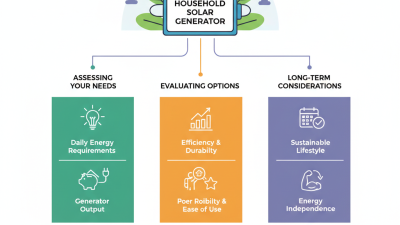
Choosing a solar and battery system starts with your daily needs, not the largest equipment available. A grid-tied solar system suits homes focused on reducing monthly electricity bills. It usually costs less because it uses the utility network for backup. However, it may shut down during outages unless battery backup is included. Check local interconnection rules before signing a contract.
A hybrid system combines solar panels, a battery, and grid access. It fits households that want lower bills and dependable emergency power. A professional installer should measure evening loads, startup surges, and seasonal usage. Refrigerators, pumps, and medical equipment may need more capacity than their labels suggest. Battery size matters. Bigger is not always better. Oversizing can increase cost without improving useful backup time.
Off-grid systems serve remote cabins or properties without reliable utility service. They need larger battery reserves, careful generator planning, and strong energy-saving habits. Lithium-based batteries often provide efficient daily cycling, while other chemistries may suit different budgets or temperature conditions. Ask about usable capacity, operating temperature, fire protection, maintenance, and warranty limits. A rushed design can look impressive on paper. It may still fail during three cloudy days. Recheck the load calculations, installation permits, and emergency shutdown procedures before work begins.
2026 Best Solar And Battery Storage Systems For Buyers
Installation quality shapes long-term ownership costs more than advertised equipment ratings. Berkeley Lab’s Tracking the Sun 2024 report found median residential solar prices near $3.15 per watt in 2023. Request an itemized quote covering labor, permits, wiring, monitoring, and roof work. A shaded panel string or undersized inverter can quietly reduce annual production. Confirm roof condition before installation. Replacing panels later is expensive.
Battery placement requires equal attention. Keep the enclosure away from bedrooms, exits, and standing water. Follow local electrical codes and NFPA 855 guidance for energy storage safety. Include smoke detection, clear shutdown access, and documented emergency procedures. The U.S. Department of Energy identifies thermal runaway prevention and response as continuing safety priorities. Check twice.
Maintenance is usually light, but ownership is not maintenance-free. Inspect connectors, ventilation, firmware alerts, and visible corrosion annually. Battery capacity also declines with cycling, temperature, and time. Lazard’s 2024 Levelized Cost of Storage analysis estimates unsubsidized four-hour storage at roughly $110–$228 per megawatt-hour. That range shows why tariff assumptions matter. A battery may save less than expected during mild seasons. I would not promise a fixed payback period without twelve months of load data, utility rates, and degradation assumptions. Insurance, inverter replacement, financing, and future recycling can change the calculation.