MH Energy Your Better Solar and Energy Partner

The growing reliance on renewable energy sources has propelled the demand for Home Battery Systems, which play a vital role in energy storage for residential applications. According to a report by the International Energy Agency (IEA), the global market for residential energy storage systems is projected to reach approximately 16.5 gigawatt-hours (GWh) by 2025, underscoring the increasing significance of these systems in energy management. As homeowners seek to optimize their energy use, integrating a suitable Home Battery System becomes crucial not only for energy independence but also for cost savings and enhanced sustainability.
Industry expert Dr. Sarah Thompson, a leading analyst in energy storage solutions, highlights the importance of careful selection: “Choosing the right Home Battery System is not just about capacity; it's about matching the system’s features with your specific energy needs and lifestyle.” With a multitude of options available, including varying capacities, chemistries, and smart technologies, making an informed decision is essential. Understanding the unique requirements of your household—such as peak energy usage times and backup power needs—can significantly impact the effectiveness and efficiency of your Home Battery System. In this evolving landscape, equipping yourself with essential tips for choosing the right solution will empower you to harness the full potential of home energy storage.
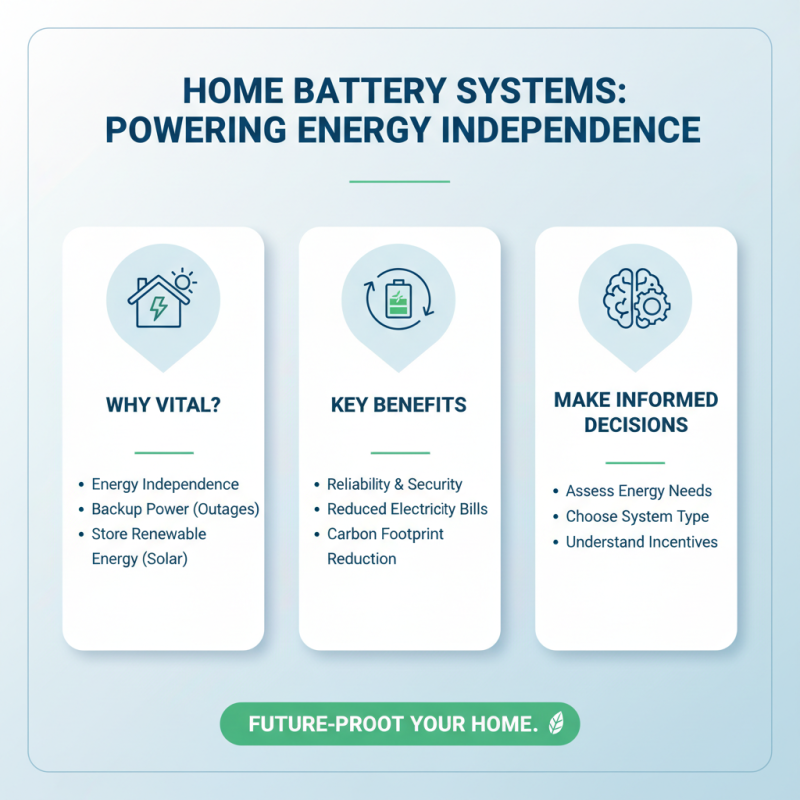
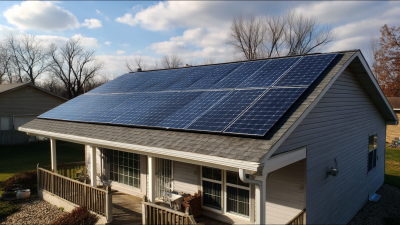
Home battery systems have become increasingly vital as more households seek energy independence and sustainability. These systems not only provide backup power during outages but also allow homeowners to store excess energy generated from renewable sources like solar panels. By understanding the importance of home battery systems, individuals can make informed decisions that align with their energy needs and lifestyles.
Moreover, home battery systems contribute to grid stability and can help mitigate energy costs over time. They enable users to draw power from their battery storage during peak hours when electricity rates are higher, thus saving money and reducing reliance on fossil fuels. Additionally, as the demand for clean energy rises, these systems play a crucial role in supporting a greener future. Overall, recognizing the significance of home battery systems is essential for optimizing energy consumption and enhancing home resilience.

When selecting a home battery system, there are several key factors to consider to ensure it meets your needs effectively. First, assess your energy consumption patterns and requirements. Understanding how much energy your household uses on a daily basis will help you determine the capacity of the battery you need. Look at the types of appliances you frequently use and whether you need the battery to provide backup power during outages or to optimize energy use during peak demand times.
Another important factor is the battery's chemistry and lifespan. Different battery technologies, such as lithium-ion or lead-acid, have various efficiencies, lifespans, and maintenance needs. Consider the trade-offs between initial cost and long-term value, as well as the battery's ability to handle daily cycles and its efficiency in charging and discharging. Additionally, compatibility with your existing solar system, inverters, and other home energy management systems can greatly influence your choice, ensuring seamless integration for optimal performance.
| Factor | Description | Considerations |
|---|---|---|
| Capacity | Measured in kilowatt-hours (kWh), indicates how much energy the battery can store. | Determine your energy consumption needs to select an appropriate capacity. |
| Power Rating | Indicates the maximum amount of power (in kilowatts, kW) the battery can deliver at once. | Match the power rating to your peak energy usage. |
| Battery Type | Includes Lithium-ion, Lead-Acid, and others, each with pros and cons. | Consider lifespan, efficiency, and cost of different technologies. |
| Installation | Some batteries require professional installation, impacting total costs. | Evaluate your DIY skills and the complexity of the installation. |
| Warranty | Duration and coverage of the warranty can signal reliability of the product. | Look for warranties that ensure long-term performance. |
| Cost | Initial purchase price plus any installation and maintenance fees. | Calculate the total cost of ownership, not just the upfront price. |
| Integration | Ability to work with existing solar panels or home systems. | Check compatibility for a smooth integration process. |
| Safety Features | Look for thermal management, overcharge protection, and other safety measures. | Ensure the battery complies with safety regulations. |
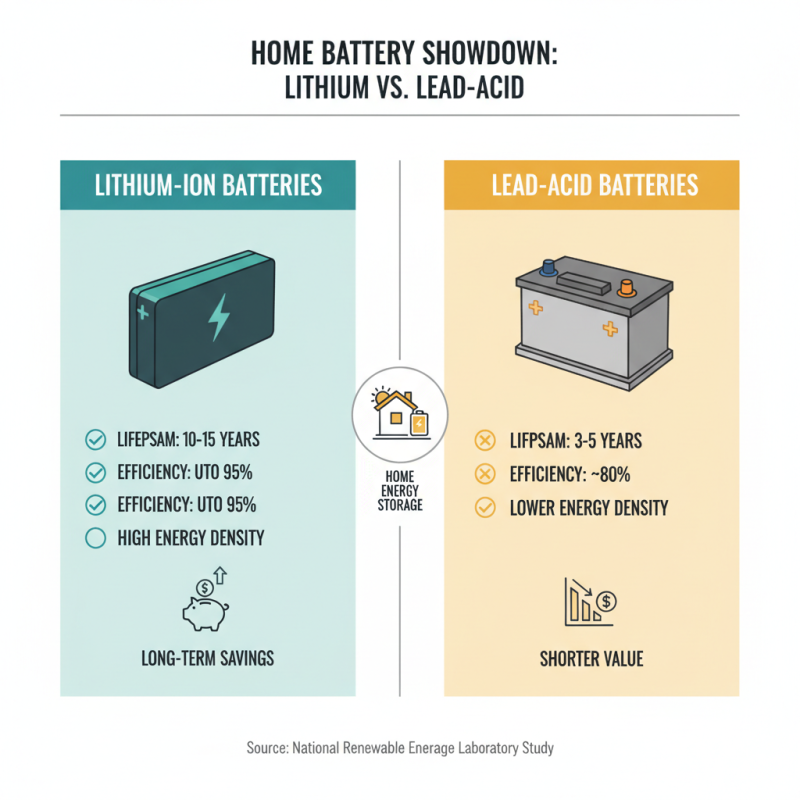
When selecting a home battery system, it's crucial to understand the different types of technologies available. The two most commonly used home battery technologies are lithium-ion and lead-acid batteries. Lithium-ion batteries, which are known for their high energy density and longer lifespan, can typically last 10 to 15 years, while lead-acid batteries often have a lifespan of only 3 to 5 years. According to a study by the National Renewable Energy Laboratory, the efficiency of lithium-ion batteries can reach up to 95%, compared to about 80% for standard lead-acid options. This efficiency translates to a more effective use of your stored energy, potentially lowering your energy costs in the long run.
Tip: Always consider your energy storage needs relative to your current and future energy demands. It's advisable to calculate your average daily energy consumption and choose a battery with at least 20% extra capacity to accommodate future growth.
Another important aspect is the depth of discharge (DoD), which indicates how much energy can be safely used before the battery needs to be recharged. Lithium-ion batteries typically have a higher DoD, often cited at around 80-90%, while lead-acid batteries usually have a DoD of about 50%. This means that lithium-ion batteries not only store more energy but also allow you to use a greater portion of that energy, making them a better choice for many homeowners.
Tip: Pay attention to warranties and after-sales support when selecting a battery. A good warranty can reflect the manufacturer's confidence in their product's longevity and performance, crucial in making an informed decision.
When considering a home battery system, the first step is to thoroughly assess your energy needs to ensure optimal performance. According to a report by the International Energy Agency (IEA), residential electricity consumption has increased significantly, with households now using an average of 877 kWh per month in 2022, up from previous years. This growth emphasizes the importance of accurately measuring your energy usage, particularly the most demanding times during the day. Understanding your peak demand can help you select a battery system that not only meets your daily requirements but also supports fluctuations in usage.
Additionally, it is essential to consider the capacity and depth of discharge of the battery system. A study by BloombergNEF highlights that battery systems should ideally be capable of storing energy that caters to at least 48 hours of backup for critical appliances. By calculating the total watt-hours needed during peak times—factoring in essential devices like refrigerators, heating systems, and lighting—you can better determine the size of the system required. Choosing the right battery system involves more than just capacity; it requires a tailored approach to your household's specific energy profile and anticipated demands.
When considering a home battery system, budgeting and installation are key factors that greatly influence your decision-making process. According to a report by the U.S. Department of Energy, the average cost for a residential battery system ranges from $5,000 to $7,000, depending heavily on capacity and technology. Homeowners should not only consider the upfront costs but also the long-term savings on energy bills and potential incentives for renewable energy integration. For instance, many states offer tax credits that can offset installation expenses, making it crucial to research local programs before committing.
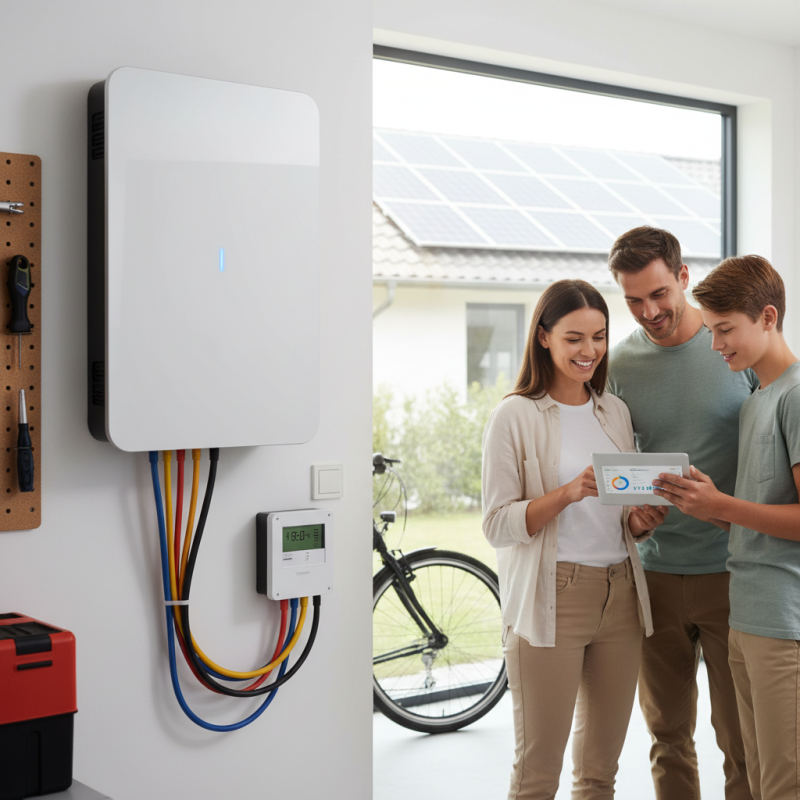
Installation is another critical component, as improper setup can lead to inefficiencies or even safety hazards. Citing a recent survey by Solar Energy Industries Association, approximately 30% of homeowners reported issues with their initial installation, emphasizing the importance of hiring certified professionals. A well-planned installation should take into account accessibility, local building codes, and optimal placement for efficiency. Homeowners should seek detailed quotes from licensed installers and inquire about installation warranties to protect their investment. By approaching budgeting and installation with careful planning and research, homeowners can choose a battery system that best fits their energy needs and adds value to their property.