What Is a Solar Photovoltaic System?
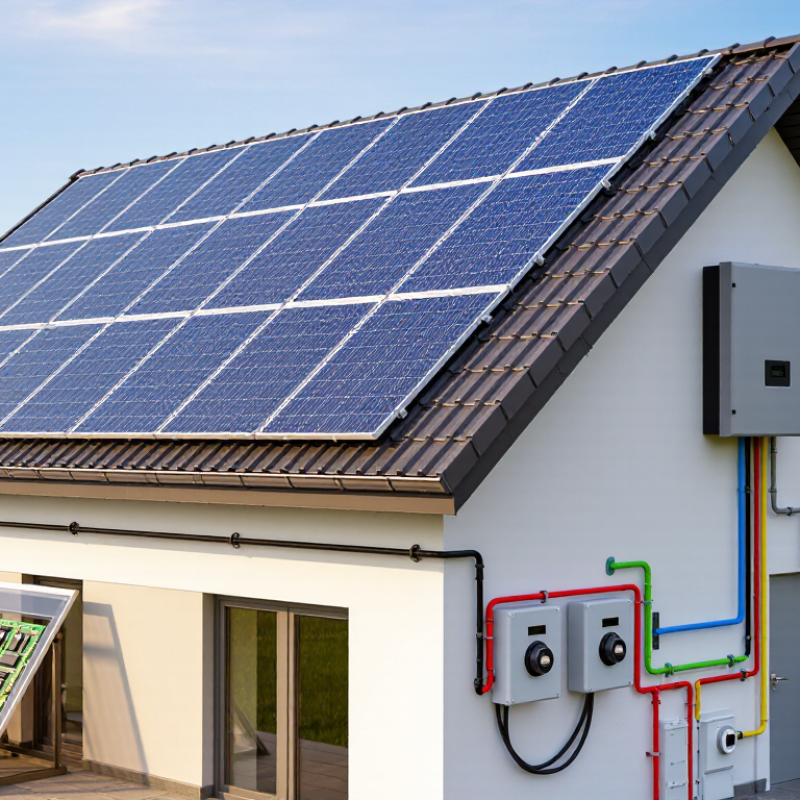
A Solar Photovoltaic System turns sunlight into usable electricity through semiconductor cells. In a typical rooftop installation, panels collect light, an inverter converts their direct current into alternating current, and wiring connects the equipment to a building or the grid. Some systems also include batteries. The details matter: a shaded panel, a poorly matched inverter, or a roof facing the wrong direction can affect real-world output.
The technology is already operating at a vast scale. IRENA’s Renewable Capacity Statistics 2025 reports that solar power capacity increased by about 452 gigawatts worldwide in 2024, bringing total installed capacity to roughly 1,865 gigawatts. That is substantial. These figures describe capacity, not constant electricity production; clouds, seasons, temperature, and equipment condition all shape how much energy a system actually delivers. A nameplate rating cannot tell the whole story.
Understanding the equipment is only part of the picture. This guide explains how photovoltaic cells work, what system components do, and how installation choices influence performance. It also considers costs, maintenance, and practical limits. A solar array may look simple from the driveway, but its output depends on many details. And not every roof is suitable. The goal is not to promise effortless savings, but to give readers a clear basis for asking better questions and evaluating claims against reliable technical information.
Photovoltaic Principle: Solar Cells Convert Sunlight into Direct Current
A photovoltaic cell turns light into electricity through the photovoltaic effect. In a typical silicon cell, sunlight supplies energy to electrons in the semiconductor. The cell’s internal electric field separates the resulting charges, while metal contacts guide their movement through an external circuit. That flow is direct current, or DC. The process sounds simple. It is not. Photons with too little energy may pass through, while excess energy often becomes heat. So a bright rooftop does not convert every ray into useful electricity.
Cells connect into modules, and modules form arrays sized for a building or site. The International Energy Agency’s Photovoltaic Power Systems Programme reported that global solar capacity reached about 1.6 terawatts by the end of 2023, following roughly 447 gigawatts of new installations that year. Those figures show the technology’s scale, not the output of any single system. Shade from a chimney, dust on glass, cell temperature, and wiring all affect real production. IEA PVPS and the U.S. National Renewable Energy Laboratory describe the same core conversion, but a basic diagram can hide practical losses. That gap deserves attention. The DC electricity can power DC loads or be converted to alternating current by an inverter; the cells themselves still produce DC.
System Types: Grid-Tied, Off-Grid, and Hybrid Configurations
A solar photovoltaic system turns sunlight into direct-current electricity, then an inverter supplies usable alternating current. Its configuration determines where extra electricity goes and what happens after sunset. In a grid-tied system, panels serve daytime loads; surplus power flows to the grid, while the home draws power when production falls. A standard grid-tied system usually shuts down during an outage, protecting utility workers. No backup, unless batteries are added. The IEA PVPS Snapshot of Global PV Markets 2024 reports more than 1.6 terawatts of cumulative solar capacity worldwide at the end of 2023, reflecting the scale of systems now connected to electricity networks.
Off-grid systems operate without a utility connection. Batteries store daytime generation for evening lights, refrigeration, or a well pump; careful sizing matters during cloudy stretches. Hybrid systems combine grid access, solar panels, and batteries, allowing stored energy to serve selected loads during outages. The trade-off is not always neat: batteries add cost and need space, while a small system may leave critical appliances unsupported. The IEA’s Renewables 2024 report expects solar to provide about 80% of global renewable capacity growth through 2030. That expansion does not make one setup right for every roof or household. Map actual loads, outage needs, and winter sunlight before choosing.
What Is a Solar Photovoltaic System?
Typical components in grid-tied, off-grid, and hybrid configurations
A photovoltaic (PV) system converts sunlight into electricity. This chart shows typical core components: 1 means included and 0 means not typically included. Backup generators are optional and are not shown; grid-tied systems generally shut down during a grid outage unless equipped with suitable storage and backup equipment.
Global Deployment: IRENA Reports 1,419 GW of Solar PV Capacity in 2023
What Is a Solar Photovoltaic System?
Global Deployment: IRENA Reports 1,419 GW of Solar PV Capacity in 2023
A solar photovoltaic (PV) system converts sunlight directly into electricity using semiconductor cells. By the end of 2023, global installed PV capacity had reached 1,419 GW, according to IRENA’s Renewable Capacity Statistics 2024. That is a striking scale. IRENA recorded 345.5 GW of new solar capacity added that year, more than any other renewable technology.
Those gigawatts include utility-scale arrays, warehouse rooftops, and small home systems. Panels produce direct current; inverters convert it to alternating current for buildings and grids. Batteries can store surplus electricity, but they are not counted as PV capacity. The IEA’s Renewables 2023 report projected more than 1,500 GW of solar PV additions between 2023 and 2028. That remains a forecast, not a guarantee.
Installed capacity is not the same as electricity delivered. Output varies with daylight, weather, location, and grid access. The 1,419-GW figure describes equipment capacity under rated conditions, not power available at every hour. The distinction matters. Rapid deployment is real progress, but annual additions alone cannot show whether transmission, storage, and local planning are keeping pace. The numbers leave that question open.
What Is a Solar Photovoltaic System? - Global Deployment: IRENA Reports 1,419 GW of Solar PV Capacity in 2023
| Category |
Indicator |
2023 value |
Description |
| Global deployment |
Installed solar PV capacity |
1,419 GW |
Worldwide cumulative solar photovoltaic capacity at year-end. |
| Global deployment |
Solar PV capacity added during the year |
346 GW |
Approximate new solar PV capacity installed worldwide in 2023. |
| Renewable energy context |
Total renewable power capacity |
3,870 GW |
Global installed capacity across all renewable power technologies. |
| Renewable energy context |
Solar PV share of renewable capacity |
About 36.7% |
Share calculated from 1,419 GW of solar PV out of 3,870 GW of total renewable capacity. |
| System fundamentals |
Primary energy source |
Sunlight |
PV cells convert light directly into direct-current electricity through the photovoltaic effect. |
| System fundamentals |
Common system components |
Panels, inverter, wiring |
An inverter converts the panels’ DC electricity into alternating current for typical building loads or grid use. |
Source: IRENA, Renewable Capacity Statistics 2024. Global capacity figures are rounded; the percentage is calculated from the reported capacity values.
Performance Over Time: NREL Reviews Find Median Module Degradation Near 0.5% Annually
What Is a Solar Photovoltaic System?
A solar photovoltaic (PV) system converts sunlight into electricity using connected panels, wiring, and power-conversion equipment. Its output can change with clouds, temperature, shade, and equipment condition. A lower reading on one afternoon does not necessarily mean the panels are degrading.
NREL reviews have found median solar-module degradation near 0.5% per year. In practical terms, a module may produce slightly less electricity as it ages. The median describes the midpoint across reviewed results, not a guarantee for every installation. That matters. Some modules degrade more slowly, while others face harsher heat, moisture, or installation conditions. A steady rate near 0.5% would leave a module producing roughly 88% of its initial capacity after 25 years, before accounting for other system losses. Real-world results vary. Measurements can also be noisy, and a single year tells you little.
Tips: Compare annual production over several years, using similar seasons and weather data when possible. Check for new shade, dirt, or faults before blaming panel aging. Keep records. A clean comparison takes patience.