How to Install a 10kW Solar Power System at Home?
Installing a Solar Power System 10kW at home is an excellent way to embrace renewable energy. According to Dr. Emily Larson, an expert in renewable energy solutions, “A well-installed solar system can reduce energy bills significantly.” This statement resonates with many homeowners looking to cut costs and minimize their carbon footprint.
A 10kW solar power system can meet the needs of an average household. However, some homeowners underestimate the complexities involved in the installation process. It requires careful planning, appropriate sizing, and compliance with local regulations. Engaging with professionals can prevent costly mistakes, but it often involves a learning curve.
As you explore the installation options, be prepared for potential setbacks. For instance, finding the right equipment can be overwhelming. The growing market has many options, making it difficult to choose wisely. Remember, a successful installation not only depends on the equipment but also on how well it fits your unique home needs. Embracing this project offers rewards, but challenges will arise.
Understanding the Basics of a 10kW Solar Power System
When considering a 10kW solar power system, understanding the basics is crucial. A 10kW system can produce significant energy. This output depends on factors like location and sun exposure. In sunny areas, the energy yield is higher. You might generate more than enough energy for a typical household. However, shading and panel orientation can reduce efficiency.
Installation requires careful planning. Determine your energy needs before proceeding. Calculate how many panels you will need. Each panel usually produces 300-400 watts. You may require 25 to 34 panels for a 10kW system. This might seem like a lot, but they can often fit on rooftops.
Be prepared for potential challenges. Local regulations can complicate installation. There might also be zoning laws to consider. Some permits take time to obtain. Installation costs can be substantial. Factor in those costs alongside potential savings. Solar energy is generally cheaper over time. But the upfront investment may feel daunting. Reflect on these aspects carefully before committing.
Assessing Your Home’s Energy Needs and Solar Potential
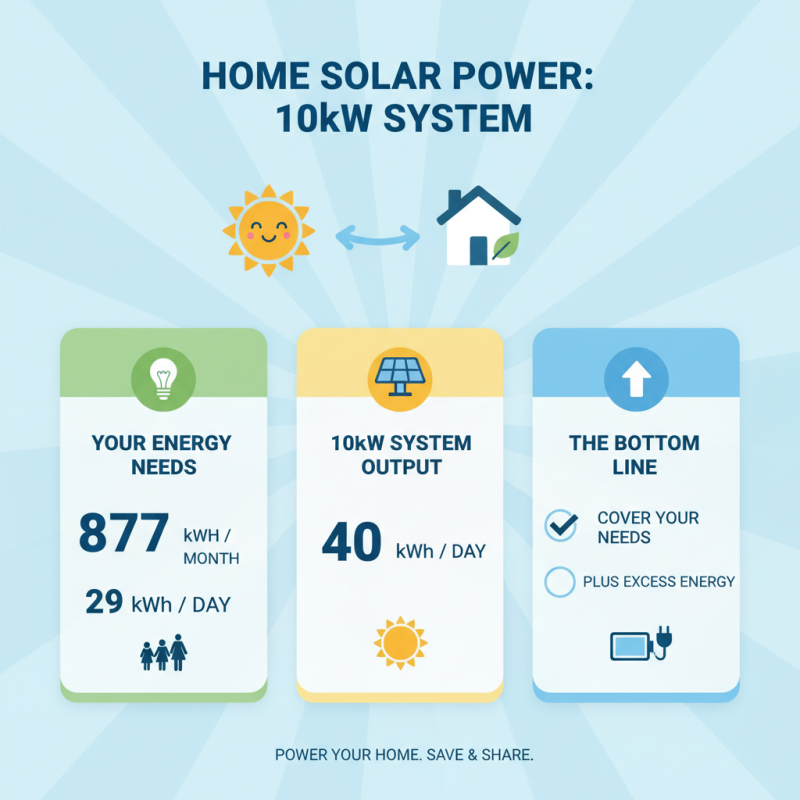
When considering a 10kW solar power system for your home, understanding your energy needs is crucial. A typical American household consumes about 877 kWh per month, which translates to roughly 29 kWh daily. A 10kW system can produce about 40 kWh per day, depending on the location and sunlight availability. This production can cover your needs, leaving room for excess energy generation.
Assessing solar potential involves analyzing factors such as roof orientation and shade. According to the National Renewable Energy Laboratory (NREL), homes with south-facing roofs often generate the highest energy output. If trees or buildings cast shadows on your roof, it could significantly reduce production. Local weather patterns also play a role; sunny regions tend to optimize solar panel efficiency.
A common misconception is that any home can benefit equally from solar energy. Some may find that the initial cost and installation complexities outweigh potential savings. Therefore, conducting a thorough energy audit before installation is essential. This audit should evaluate current usage and future needs. Engaging with professionals can provide insights into specific local incentives, which may influence your decision.
Choosing the Right Equipment for Your Solar Power Installation
Choosing the right equipment for your solar power installation is crucial. Start with solar panels. Look for ones with good efficiency ratings. High-efficiency panels convert more sunlight into energy. Make sure they fit the space available on your roof or yard. Measure carefully. You might need a mix of large and small panels.
Inverters are equally important. They convert the energy from the panels into usable power. There are string inverters and microinverters. Each has its pros and cons. Consider the layout of your system. Sometimes one type is better suited for certain installations. Battery storage may also be a part of your plan. It helps store excess energy for later use.
Don’t forget the mounting hardware. It must be strong and weather-resistant. This equipment holds panels in place, ensuring stability. Some people overlook this aspect. Installation can be tricky. Always check local regulations. Codes vary by area. Ignoring them could lead to problems down the line. Make a list and double-check everything.
Step-by-Step Installation Process for a 10kW Solar System
Installing a 10kW solar power system at home can be a rewarding yet challenging task. Begin by assessing your energy needs. A 10kW system typically generates enough power for an average household. Measure your roof space to ensure it can support the panels. Check for any obstructions like trees or chimneys that might cast shadows on the panels.
When you design your system, it's crucial to include inverters and batteries if you want energy storage. Position the panels to face the sun as much as possible. This maximizes efficiency. Ensure that the wiring is installed securely. Improper wiring can lead to significant losses or hazards.
**Tip:** Always research local regulations and permits. Some areas may have specific requirements for installation.
Start the physical installation with mounting brackets. Make sure they are leveled correctly. Any misalignment can affect performance later. After securing the panels, connect the inverter. Test connections carefully before finalizing the setup.
**Tip:** Don't rush through the testing phase. Mistakes here can be costly and time-consuming to fix later.
Review your work after installation. Look for any loose connections or misaligned panels. Observe how the system performs in the first few weeks. Adjustments might be necessary.
Monthly Energy Production from a 10kW Solar Power System
This chart illustrates the estimated monthly energy production (in kWh) from a 10kW solar power system throughout the year. The data shows how solar panels generate different amounts of energy based on seasonal variations.
Navigating Permits and Incentives for Residential Solar Energy
Installing a 10kW solar power system at home can seem daunting, especially when navigating permits and incentives. Before starting, research your local regulations. Many areas require specific permits for installation. These can include electrical permits and zoning permits. The application process may take weeks, so plan ahead.
Incentives can significantly reduce your installation costs. Look for government rebates or tax credits for solar energy systems. Some states offer additional incentives. Understanding these programs can be tricky. Keep track of deadlines and necessary paperwork to ensure you qualify. Note that incentives might change over time, so check regularly.
Consulting a professional can simplify this process. They can assist with permits and understanding incentives. However, not all professionals are equally knowledgeable. Do your homework to find a reputable installer. Sometimes, red tape can be frustrating. But careful planning can help you overcome these hurdles. It’s essential to ask questions and remain informed.
How to Install a 10kW Solar Power System at Home? - Navigating Permits and Incentives for Residential Solar Energy
| Aspect |
Details |
| System Size |
10 kW |
| Estimated Cost |
$15,000 - $25,000 |
| Installation Time |
1-3 days |
| Permits Required |
Building permit, Electrical permit |
| Incentives Available |
Federal Tax Credit, State Rebates |
| Average ROI |
5-7 years |
| Maintenance |
Minimal, cleaning and periodic inspections |
| Common Panel Type |
Monocrystalline |