How to Get Government Solar Panels for Your Home?
Government Solar Panels are becoming an essential topic for homeowners. With rising energy costs, many seek alternative power solutions. According to the U.S. Energy Information Administration, solar energy production could triple by 2030. This trend highlights the importance of government incentives.
Government programs aim to promote renewable energy. They offer financial assistance to make solar installations affordable. The Solar Energy Industries Association reported that solar jobs have increased by 20% over the last year. This growth reflects the expanding market and the need for skilled professionals.
However, not everyone finds it easy to access these benefits. Some homeowners struggle to navigate the application process. A lack of transparency can lead to frustration. Many overlook state-specific incentives that could lower costs. Recognizing these challenges is crucial when pursuing Government Solar Panels for your home.

Understanding Government Solar Panel Programs Available for Homeowners
Government solar panel programs can offer homeowners significant benefits. Many states have initiated initiatives to promote renewable energy. These programs focus on reducing installation costs and increasing accessibility. Some offer financial incentives, while others provide information on local rebates. This can make solar energy a viable option for many families.
Homeowners may find different types of programs. Some are aimed at low-income households, providing full subsidies for solar installations. Others target general homeowners with tax credits or grants. Understanding the eligibility requirements is crucial. Applicants often face strict guidelines, making it essential to review documentation carefully. Sometimes, unexpected challenges arise, leading to delays or denials.
Joining community solar projects is another option. These initiatives allow shared participation in larger solar farms. Homeowners without suitable rooftops can benefit from these projects. However, the application process can be complex. Participants need to remain patient and committed. Navigating these programs requires research and perseverance. It’s a journey with ups and downs, but the potential rewards are worth the effort.
Government Solar Panel Incentives for Homeowners
This bar chart illustrates the various government solar panel incentives available to homeowners, highlighting potential financial benefits. The data reflects estimated values of incentives including federal tax credits, state rebates, local incentives, net metering options, and grant programs. Homeowners can take advantage of these programs to reduce the overall cost of installing solar panels.
Eligibility Criteria for Government-Funded Solar Panel Installation
When considering
government-funded solar panel installation, understanding eligibility criteria is crucial. Different regions may have varying requirements, but common factors include homeowner status, income level, and property conditions. Most programs focus on assisting low- to middle-income households. Proving your income through tax returns or pay stubs often becomes necessary.
Homeownership is usually a must. Renters may face restrictions, which can feel discouraging. Some programs may require you to reside in specific areas or demonstrate a commitment to sustainability. This might seem unfair, but the aim is to support those who need it most.
The condition of your roof and energy usage may also come into play. A sturdy roof that can handle solar panels is essential. If your energy use is low, you might not qualify. It’s a balancing act between your needs and what’s acceptable. A thorough evaluation process means you may find yourself reflecting on your energy habits and what you truly require. Embracing these requirements can help pave the way for a greener future.
Step-by-Step Application Process for Government Solar Panel Assistance
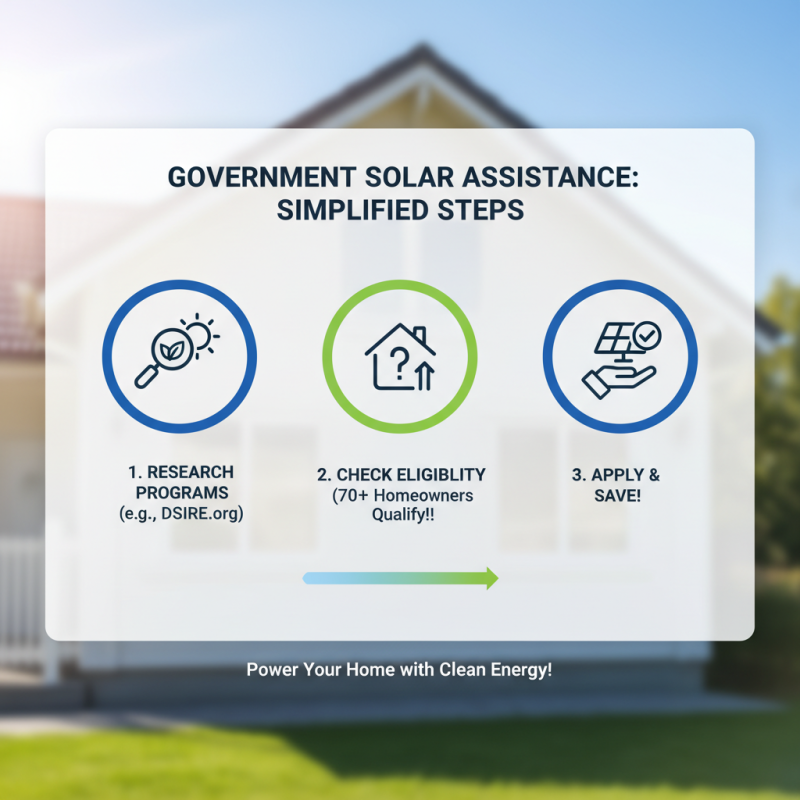
Applying for government solar panel assistance can seem daunting. However, the process can be simplified by following a clear set of steps. Initial research is essential. Websites like the Database of State Incentives for Renewables & Efficiency (DSIRE) offer valuable information about local programs. Understanding eligibility requirements is vital. Over 70% of homeowners may qualify for some form of assistance. This data indicates significant opportunities for those looking to adopt solar energy.
Next, gather necessary documents. Proof of income, homeownership, and existing energy bills are typically required. Some programs may request detailed energy audits, which can cost money and time. Be prepared for these additional requirements, as they can delay the process. According to the Solar Energy Industries Association, 51% of homeowners apply for assistance but experience setbacks during documentation.
Once your application is ready, submit it to the appropriate agency or program. Follow up regularly for updates. Patience is key, as processing times may vary. Some applicants report waiting weeks or even months for a response. Keep in mind that rejections can happen, often due to incomplete applications. Use feedback from attempts to refine future submissions. Every setback is a learning opportunity, pushing you closer to achieving solar energy solutions for your home.
Financial Incentives: Grants, Rebates, and Tax Credits for Solar Panels
Installing solar panels can be financially beneficial. Many homeowners overlook the incentives available.
Government programs often provide grants, rebates, and tax credits.
These can significantly reduce the overall cost of solar energy systems. Understanding how to access these benefits is crucial.
Grants may cover a portion of the installation expenses. Each state's program varies, and some may have limited funding.
Rebates can also help. They allow for immediate savings once the installation is complete.
Tax credits are typically offered at the federal and state levels. You might receive a certain percentage back on your income taxes, easing financial burdens.
While these incentives are appealing, the application process can be complex. Many homeowners feel overwhelmed by the paperwork.
It's helpful to consult local energy offices or websites for accurate information.
Navigating the rules may take extra time and effort. But the potential savings can be worth it.
Maintenance and Support Services Post-Installation of Solar Panels
Maintaining solar panels is essential for optimal energy production. After installation, regular checks are needed. Dust and debris can accumulate on panels. They may cause reduced efficiency. Cleaning them might require special tools or help from professionals.
Support services are also crucial. Many homeowners overlook this aspect. Often, warranties offer limited coverage. It's vital to understand the terms before installation. Some issues can arise years after setup. Being proactive can save time and money.
Consider signing up for a maintenance plan. It can provide peace of mind. You may need to set aside a budget for these services. Sometimes, finding reliable contractors can be difficult. Researching their reviews helps, but it’s not always foolproof. Each home has unique needs, and what works for one may not work for all.