Best Fun Facts About the Solar System to Fascinate You?
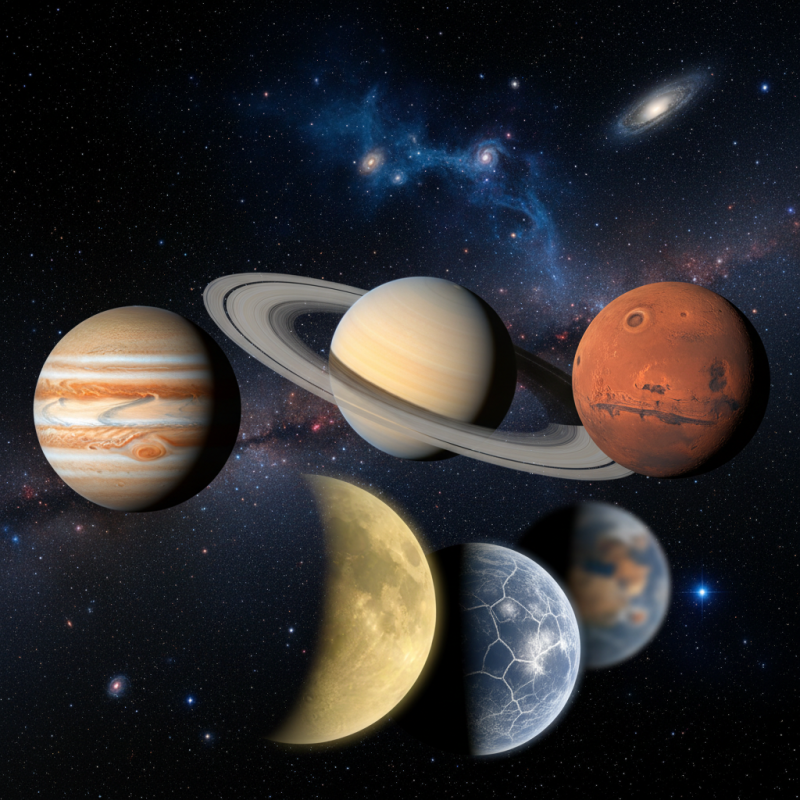
The Solar System holds countless wonders that captivate our imagination. From the majestic rings of Saturn to the fiery storms of Jupiter, each planet tells its own story. Did you know that a day on Venus lasts longer than a year? Or that Mars, the red planet, has the largest volcano in our system?
These fun facts will spark your curiosity about the Solar System. They reveal mysteries that often go unnoticed. For example, how could a moon be covered in ice while being close to a gas giant? The contrasts within our Solar System are compelling. Exploring these curious tidbits can ignite our desire to learn more.
Embrace the beauty of knowledge about the Solar System. It inspires questions and encourages a deeper understanding of our universe. Let’s marvel at the details that make each celestial body unique and complex. The more we explore, the more we realize how much remains untold.
Fun Fact 1: The Size and Scale of Our Solar System
The size and scale of our solar system are truly mind-boggling. Our solar system stretches across about 9 billion kilometers. It takes light from the Sun over 8 minutes to reach Earth. Imagine how far that is when traveling at 299,792 kilometers per second!
To give you a sense of this vastness, consider that Mercury, the closest planet to the Sun, is about 58 million kilometers away. Neptune, on the other hand, resides nearly 4.5 billion kilometers from the Sun. The distances involved are not just numbers; they reflect the immense cosmos we live in.
**Tip:** Use a scale model to visualize the solar system. A simple garden or a park can work! Place the Sun at one end, and measure out distances to the planets using common walking steps. This can clarify just how enormous the solar system really is.
It's also worth reflecting on our place in this vastness. We are one tiny planet floating among countless others. This can feel both humbling and inspiring. Understanding our solar system's scale helps us grasp the complexity of the universe. The more we learn, the more questions arise about our existence and the nature of our surroundings.
Fun Fact 2: The Unique Features of Each Planet
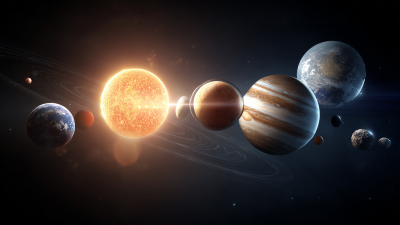
The solar system is a vast playground of unique features that captivate the imagination. Each planet has characteristics that set it apart from the rest. For instance, Jupiter is the largest planet, boasting a massive storm called the Great Red Spot. This storm is larger than Earth and has raged for centuries. According to NASA, it represents a significant glimpse into the planet's atmospheric dynamics.
Venus, often called Earth's twin, has an atmosphere thick enough to crush a submarine. Its surface temperature averages around 900 degrees Fahrenheit. This extreme heat results from a runaway greenhouse effect. In stark contrast, Mars features the largest volcano in the solar system, Olympus Mons, three times the height of Mount Everest. Yet, it remains a frozen world, leaving many to ponder its icy terrain and potential for past life.
Consider Saturn, with its stunning rings made of ice and rock particles. Some science reports suggest these rings could be a temporary feature. They may dissolve over millions of years. This impermanence evokes curiosity and wonder about what we still do not understand about our cosmic home. Each planet holds secrets that challenge our understanding of the universe. Let's keep exploring.
Fun Fact 3: The Role of the Sun in the Solar System
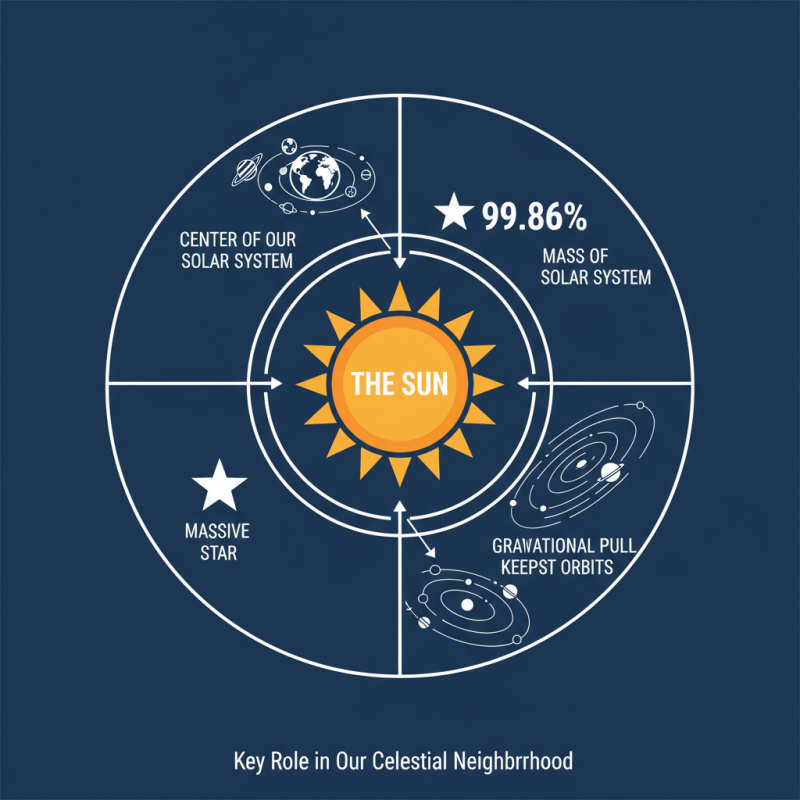
The Sun plays a crucial role in our solar system. It is the center of our celestial neighborhood. This massive star contains about 99.86% of the total mass of the solar system. Its gravitational pull keeps planets, dwarf planets, and other celestial objects in orbit.
Radiating energy, the Sun influences Earth's climate and weather. Solar energy fuels photosynthesis, vital for life. Research indicates that solar output varies over cycles of approximately 11 years. These fluctuations impact Earth’s temperatures and weather patterns, sometimes leading to extreme events.
Interestingly, the Sun is composed mostly of hydrogen and helium. About 73% of its mass is hydrogen, while helium accounts for roughly 25%. Despite its enormity, the Sun is just an average-sized star. It will eventually exhaust its nuclear fuel and transform into a red giant. This eventual fate sparks questions about the long-term survival of Earth and life as we know it. The future is uncertain, and this reality compels us to reflect on our place in the universe.
Fun Fact 4: Moons and Their Mysteries
The solar system is home to over 200 moons, each with its own mysteries. For instance, Jupiter's moon Europa has an ocean beneath its icy surface. This ocean could harbor life, prompting scientists to explore its potential. The thickness of Europa's ice is estimated to be around 15 to 25 kilometers. Such depth adds to the complexity of studying this moon.
Saturn's moon Titan is another fascinating case. It is the only moon in our solar system with a dense atmosphere. Titan's atmosphere is mostly nitrogen, similar to Earth's. Researchers have discovered lakes of liquid methane on its surface. This raises questions about what life could look like in such extreme conditions. Interestingly, studies show that conditions on Titan might mimic those of early Earth.
Despite these amazing discoveries, there are still so many unanswered questions. For example, how did these moons form? What geological processes are at work? The mysteries behind moons like Europa and Titan urge us to investigate more. Exploration is critical in revealing the secrets of our solar system. Understanding these celestial bodies could transform our grasp of life's possibilities beyond Earth.
Fun Fact 5: Fascinating Phenomena: Asteroids, Comets, and Beyond
Asteroids and comets are not just space rocks; they are remnants from our solar system's formation. Asteroids reside primarily in the asteroid belt between Mars and Jupiter. According to NASA, there are over 1.1 million known asteroids. They vary widely in size, from small boulders to massive bodies. Some asteroids could be over 600 miles across, like Ceres. These rocky leftovers hold clues about the early solar system.
Comets, on the other hand, are icy bodies that develop tails when they approach the Sun. The dust and gas from the nucleus create a stunning visual effect. A famous comet, Halley's comet, visits our vicinity every 76 years. It last appeared in 1986 and is expected again in 2061. Comets can originate from the Kuiper Belt or the Oort Cloud, both filled with billions of icy objects.
These celestial phenomena remind us how dynamic our solar system is. The potential for asteroid impacts raises questions about planetary defense strategies. We are still learning how to monitor these objects effectively. The European Space Agency estimates that about 20% of near-Earth objects are considered potentially hazardous. This statistic sparks ongoing debates about our preparedness for possible encounters.