How to Choose the Best Solar Panel System for Home?
Choosing the best Solar Panel System Home can seem daunting. With numerous options available, how do you know what fits your needs? Energy expert Jane Smith, founder of EcoEnergy Solutions, once said, "Understanding your energy needs is key to selecting the right solar system."
Consider your home's energy consumption. Calculate how much electricity you use daily. Determine if you want to offset all or just part of your bill. A well-chosen system can drastically reduce costs and environmental impact.
It's not just about price. Quality matters too. Explore brands and technologies. Many systems promise efficiency, but not all deliver. Confusion can lead to poor decisions. The right choices require time and research. You may need to revisit your initial assumptions and explore beyond the first option.
Understanding Solar Panel Systems: Key Components and Functionality
Understanding solar panel systems involves recognizing their key components and how they work together. The primary elements include solar panels, an inverter, a mounting system, and battery storage. Solar panels convert sunlight into electricity. The inverter changes this electricity into a usable form for your home. A secure mounting system holds everything in place, while battery storage can provide energy during cloudy days or at night.
When choosing your solar system, consider the size of your roof. Shading from trees or buildings can reduce efficiency. It's essential to assess your energy needs. A system too small may not meet your requirements. Think about local weather patterns as well. A sunny location will benefit most from solar panels.
Tips: Don’t skip regular maintenance. Clean panels can perform better. Inspect your system for issues periodically. If you see a drop in output, investigate. Sometimes it’s simple, like dirt or debris. This can save you money in the long run. Always remember, every detail counts in optimizing your solar energy.
How to Choose the Best Solar Panel System for Home?
| Component |
Description |
Importance |
| Solar Panels |
Convert sunlight into electricity. |
Primary component for energy generation. |
| Inverter |
Converts DC electricity from panels to AC electricity for home use. |
Essential for compatibility with home appliances. |
| Mounting System |
Holds panels in place on rooftops or ground. |
Provides stability and optimal solar angle. |
| Battery Storage |
Stores excess energy for use during non-sunny periods. |
Enhances energy independence and efficiency. |
| Charge Controller |
Manages the flow of energy to and from the battery. |
Prevents battery overcharging or deep discharging. |
Assessing Your Energy Needs: Calculating Usage and Future Requirements
Assessing your energy needs is crucial when choosing a solar panel system. Begin by calculating your current energy usage. The U.S. Energy Information Administration states that the average American household uses about 877 kWh per month. Understand your monthly consumption to determine the size of the solar system required.
Account for future energy requirements. Think ahead. Will you buy electric vehicles or increase energy-consuming appliances? These changes can boost your energy needs by 20% or more. Anticipating these additions helps to avoid oversizing or undersizing your solar panel system.
Consider seasonal changes in energy use. For instance, air conditioning in summer can spike usage significantly. Reviewing your electricity bill can reveal patterns. This can easily show fluctuations. It's essential to factor in these variations when planning solar energy. Be mindful that inaccurate estimations could lead to unexpected costs. Understanding your lifestyle is key to making informed decisions.
Evaluating Different Types of Solar Panels: Monocrystalline vs. Polycrystalline
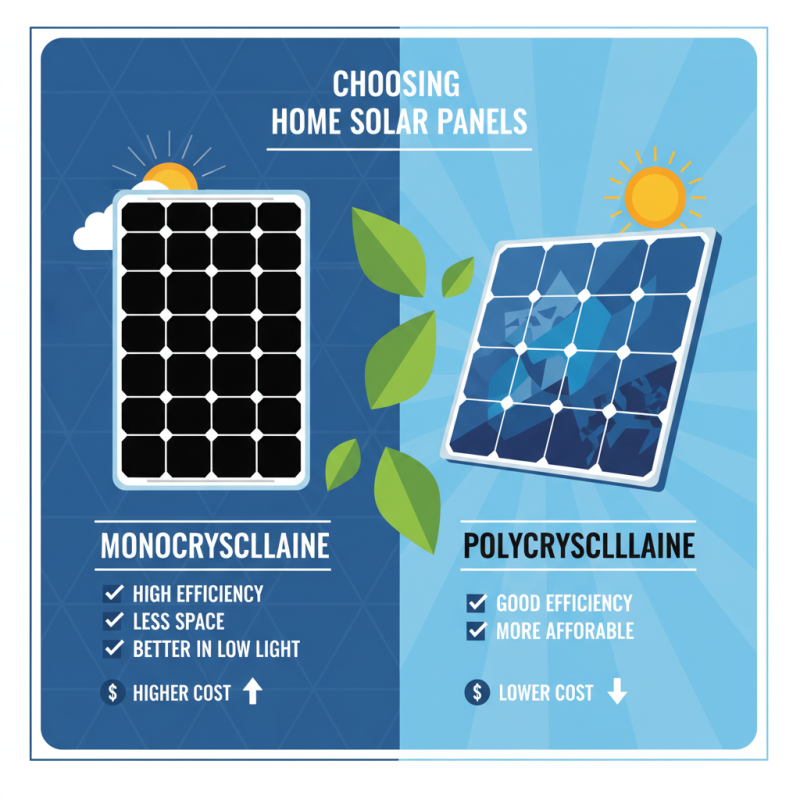
When choosing a solar panel system for your home, the type of solar panel is crucial. Two main types are monocrystalline and polycrystalline panels. Monocrystalline panels are known for their high efficiency. They occupy less space and generate more energy in limited sunlight. However, they can be more expensive than their polycrystalline counterparts.
Polycrystalline panels, on the other hand, are less efficient but often more affordable. They consist of multiple silicon crystals. This structure affects their performance in lower light conditions. Consider where you live. If you have space, polycrystalline might work well. But if space is tight, monocrystalline could be better.
**Tips:** Check the efficiency ratings of each panel type before deciding. Research the installation costs since they can vary. Analyze your energy needs to choose a suitable size. Keep in mind the warranty period; longer warranties often indicate higher quality. Regularly assess your solar energy system for optimal performance. It’s important to periodically evaluate the energy output of your panels.
Comparing Solar Inverters: Choosing the Right Type for Your System
When selecting a solar panel system, the inverter plays a crucial role. It converts the direct current (DC) from solar panels into alternating current (AC) for home use. Different types of inverters exist, including string, micro, and power optimizers. Each type has its own advantages and weaknesses. Choosing the right inverter can significantly impact your system's efficiency and lifespan.
Tips: Consider your roof layout. If it has varying angles or shaded areas, microinverters might be better. They optimize performance for each panel individually. For simpler setups, a string inverter may suffice. But be cautious; if one panel underperforms, the whole system’s efficiency drops.
Also, think about future needs. If you plan to expand your system, opt for an inverter that can handle increased output. It’s important to weigh efficiency against cost. Sometimes cheaper options may not be durable. Researching and understanding your energy usage will guide your choice. Aim for a system that balances both performance and budget while addressing potential future needs.
Comparing Different Types of Solar Inverters
Analyzing Installation Costs and Return on Investment for Solar Energy Systems
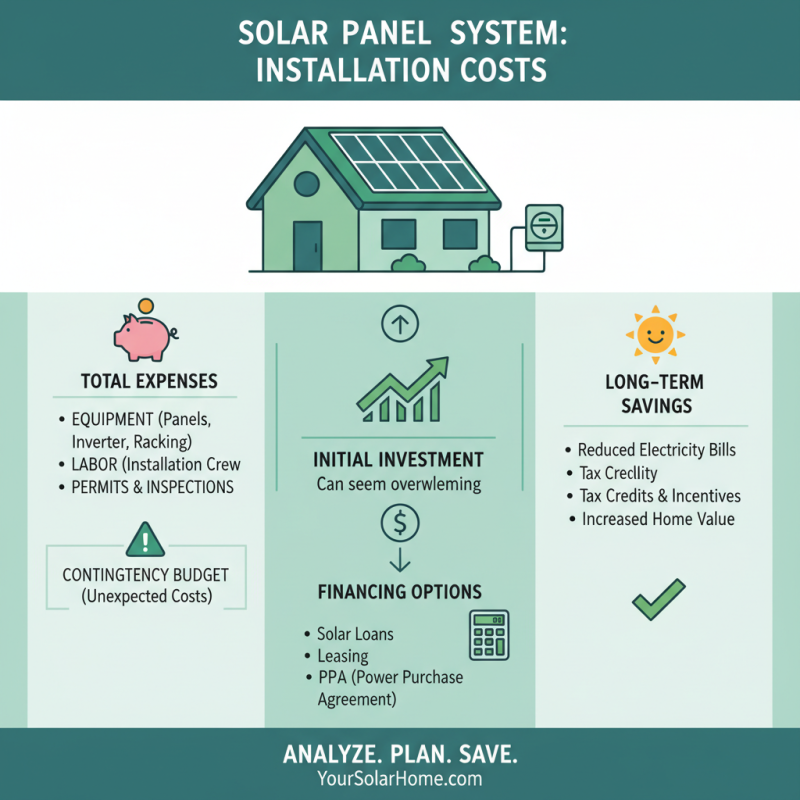
When considering a solar panel system for your home, it's essential to analyze installation costs thoroughly. Homeowners should start by evaluating the total expenses involved. This includes equipment, labor, and any permits required. Unexpected costs can arise, so it’s wise to have a contingency budget. For some, the initial investment may seem overwhelming. Yet, many find that financing options can ease this burden.
Return on investment (ROI) is a crucial factor. Typically, solar systems can take 5 to 10 years to start paying off. However, savings on energy bills can quickly accumulate. Some families report significant annual savings, leading to a shorter ROI period. Yet, panel efficiency and local energy costs can vary. Consider comparing your potential savings to the installation cost. This will help you gauge whether your investment is worthwhile.
It’s important to reflect on these figures. Installation costs can fluctuate based on various factors. Climate conditions may affect solar panel efficiency and longevity. In some cases, homeowners may end up with underperforming systems. Understanding your home’s energy needs and local incentives is vital. Weigh these elements carefully to make an informed decision.