How to Choose the Best Energy Storage Battery for Your Needs?
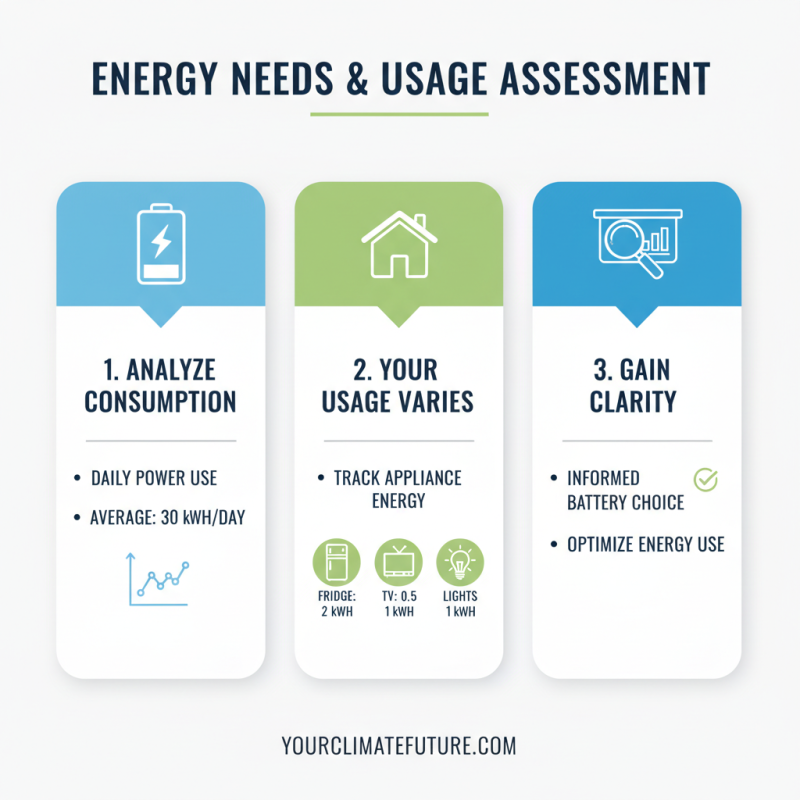
Choosing the right energy storage battery can feel overwhelming. There are many options available, each with unique features and benefits. Understanding your specific needs is crucial.
Energy storage batteries vary in capacity, lifespan, and efficiency. A small home may benefit from a different battery than a large business. Performance during peak usage times is essential. Consider if you need higher capacity for emergencies or a steady supply for daily use.
Reflect on your energy consumption habits. Are you mindful of your usage? Investing in the perfect energy storage battery can save money and enhance reliability. Evaluate the environmental impact too. Is a sustainable option important to you? Take your time. The choice you make will affect you for years.
Understanding Different Types of Energy Storage Batteries
When selecting an energy storage battery, understanding different types is crucial. Lithium-ion batteries dominate the market, offering high energy density and efficiency. According to a report by BloombergNEF, they accounted for over 90% of global battery sales in 2020. This popularity stems from their ability to store large amounts of energy in a compact size, making them ideal for residential solar systems.
Lead-acid batteries remain popular for cost-sensitive applications. They are less efficient and have a shorter lifespan compared to lithium-ion. Data shows they can lose 20% of storage capacity within a few years. Despite this, they are often used in off-grid solar systems due to their low initial costs. Understanding these trade-offs is essential. For instance, backups from lead-acid might suit a budget but could lead to frequent replacements.
Emerging technologies like solid-state batteries offer promise. They could provide enhanced safety and capacity. However, they are still in development and may not be viable for everyday use yet. Making the right choice requires weighing efficiency, cost, and technology maturity. Ultimately, no single battery type fits all needs perfectly.
Energy Storage Battery Comparison
Evaluating Battery Performance Metrics and Specifications
When choosing an energy storage battery, focus on metrics like
capacity,
lifespan, and
charge cycles.
Capacity determines how much energy the battery can store. Look for batteries with
sufficient capacity for your needs. A smaller battery might save space but may not meet
energy demands.
Lifespan is crucial, as it influences long-term costs. Some batteries degrade
faster than others. They can last anywhere from a few years to a decade.
Consider usage patterns—frequent cycling can shorten lifespan.
Tip: Always check Charge Cycle ratings.
This indicates how many times you can completely discharge and recharge your battery.
Another important aspect is the
depth of discharge (DoD).
It refers to how much energy can be safely used from the battery. A higher DoD means
you can use more of the battery's stored energy. Be cautious, though. Using all the
energy frequently may damage the battery sooner.
Tip: Look for batteries that offer
a deep discharge without significant performance loss.
Battery efficiency is also a factor to consider. It shows how much energy is usable
after charging. High efficiency means less wasted energy and more usable power.
Always weigh the performance metrics against the cost to find a suitable solution.
Considering Lifespan, Warranty, and Maintenance Requirements
When choosing an energy storage battery, consider lifespan, warranty, and maintenance. A battery's lifespan is crucial. Most lithium-ion batteries last between 5 to 15 years. However, certain models fail to meet this projection. Reports show that only 80% of batteries reach their full lifespan due to factors like temperature fluctuations and charge cycles.
Warranties also play a significant role. Many batteries come with warranties ranging from 5 to 10 years. But it's essential to read the fine print. Some warranties only cover specific conditions or usage scenarios. Neglecting maintenance can void warranties as well. Regular checks are vital, yet many users overlook this aspect.
Maintenance can be a hassle. Some batteries require periodic monitoring, while others need cooling systems. Industry data suggests that up to 30% of battery-related issues stem from improper maintenance. Missing these details can lead to early failures. A good approach is to weigh the pros and cons of battery options. Think deeply before making a choice.
Cost Analysis: Budgeting for Initial Investment and Long-Term Savings
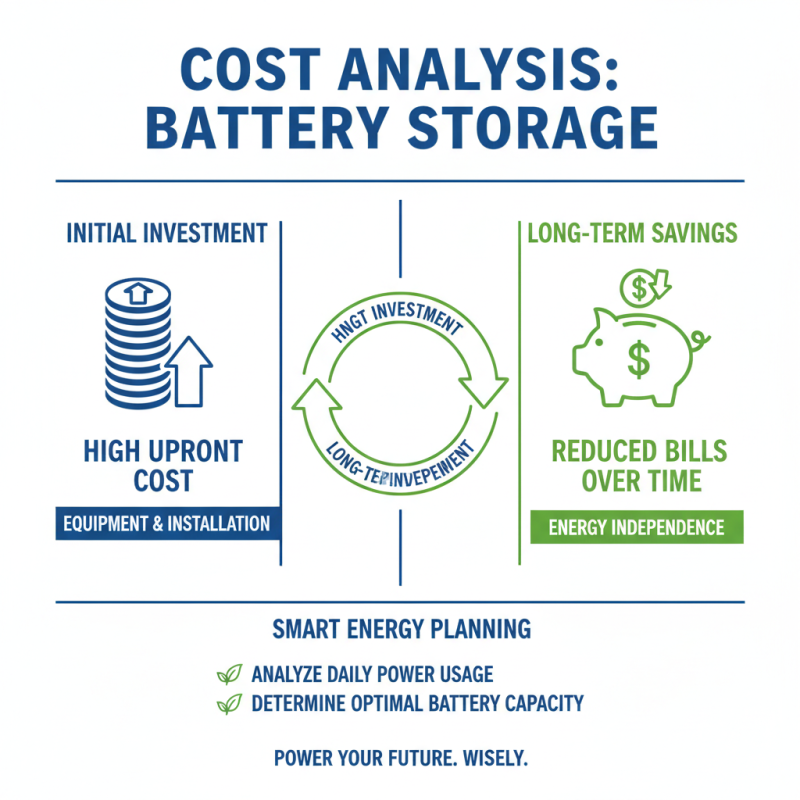
When choosing an energy storage battery, consider the costs. The initial investment can be high, but think about long-term savings. Analyze your energy needs first. How much power do you use daily? This helps determine the battery capacity you'll need.
Look into installation fees. Some batteries require professional installation. This cost adds to the initial expense. Maintenance is another factor. Some batteries need regular upkeep, which can increase costs over time.
Tips: Always compare warranties. A longer warranty can save you money later. Also, calculate your local energy rates. Understanding these can help in estimating realistic savings. Lastly, consider your usage habits. Are you using more energy during peak hours? This affects your choice. Make sure the battery fits your lifestyle and budget perfectly.