What Is the Best Solar Battery Charger from China?
Choosing the best Solar Battery Charger from China requires more than comparing prices on a marketplace. China remains a major force in global clean-energy manufacturing. The International Energy Agency’s Renewables 2024 report projects China will deliver almost 60% of global renewable capacity additions through 2030. The same report highlights China’s strong position across photovoltaic manufacturing. That scale creates advantages in component access, production volume, and product variety. It does not guarantee quality.
Real testing matters.
A useful comparison should examine solar conversion efficiency, MPPT performance, battery compatibility, charging speed, thermal control, and weather resistance. A compact 20-watt panel may perform well under bright midday sunlight but charge slowly beside a shaded campsite. Battery chemistry also changes the buying decision. Lithium iron phosphate batteries usually offer strong cycle life and thermal stability, while older lead-acid systems remain cheaper but heavier. BloombergNEF’s 2024 battery price survey shows continuing cost reductions across lithium-ion technology, although retail products can vary widely in cells, protection circuits, and warranty support.
Safety is not optional. Look for overcharge, short-circuit, reverse-polarity, and over-temperature protection. Relevant certification evidence should be clear, traceable, and suitable for the destination market. Some listings use impressive efficiency figures without explaining testing conditions. That deserves skepticism. In my view, the “best” Chinese charger is not necessarily the cheapest or most powerful model. It is the unit that delivers stable charging, documented specifications, dependable after-sales support, and honest performance under real sunlight. Weak documentation can still undermine an otherwise capable product.
What Defines the Best Solar Battery Charger from China?
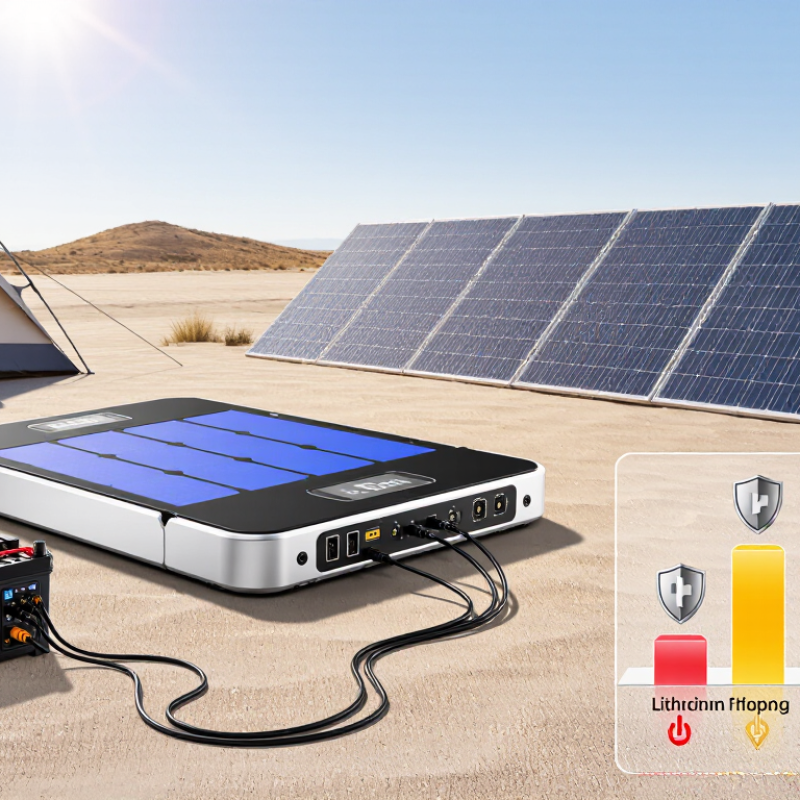
The best solar battery charger from China is defined by reliable performance, not a low purchase price. It should match the battery’s chemistry, voltage, and capacity. Lithium batteries need precise charging control, while lead-acid batteries require different voltage stages. A suitable controller prevents overcharging during bright midday conditions and protects the battery when clouds reduce solar input.
Professional evaluation should include efficiency, heat management, and protection features. Look for MPPT technology, reverse-polarity protection, short-circuit protection, and temperature monitoring. A strong enclosure also matters. Outdoor dust and sudden rain can damage poorly sealed electronics. Ask for clear datasheets, test reports, production samples, and traceable quality records. Certification details should be checked for the target market, not accepted blindly.
Tips: Test the charger with your actual panel and battery before bulk ordering. Measure charging voltage at different sunlight levels. Check the connector temperature after several hours. Confirm warranty terms, replacement procedures, and technical support in writing. A cheap charger may perform well in a showroom but fail beside a hot rooftop. Still, no unit is perfect. Even a well-tested design can need adjustment for unusual climates, weak panels, or aging batteries.
How Chinese Solar Battery Chargers Work and Are Manufactured
What Is the Best Solar Battery Charger from China?
Chinese solar battery chargers convert sunlight into controlled electrical current for storage. A panel produces variable DC power, especially under clouds or partial shade. The charger regulates this output before it reaches the battery. It may use PWM or MPPT control, depending on the design and price.
In practical testing, MPPT units usually collect more energy during weak sunlight. A temperature sensor can reduce charging stress on hot afternoons. Battery chemistry also matters. Lithium batteries need a compatible charging profile and a reliable protection system. Lead-acid batteries require different voltage limits and maintenance habits. Small details matter.
Manufacturing commonly begins with tested solar cells, circuit boards, connectors, and molded housings. Automated machines place components onto the board, while technicians inspect solder joints and cable fitting. Finished units may undergo voltage, current, insulation, heat, vibration, and water-resistance tests. Good factories record these results by production batch. That record supports traceability.
However, factory capability is not the same as product reliability. A polished enclosure can hide weak components. I would request sample testing under realistic sunlight before placing a larger order. Ask for charging curves, protection settings, operating temperatures, and destination-market compliance documents. Some specifications remain vague. That deserves caution.
The best charger depends on battery type, panel size, climate, and daily energy needs. Field conditions expose weaknesses quickly. Allow room for that uncertainty.
What Is the Best Solar Battery Charger from China?
Typical PV-to-battery efficiency ranges by solar charging topology
MPPT chargers generally capture more usable solar energy than PWM chargers because a DC-DC converter continuously adjusts the operating voltage to keep the solar panel near its maximum power point. During manufacturing, this performance depends on the quality of the controller, MOSFETs, inductors, sensors, battery-protection circuits, thermal design, and final testing. The figures show typical engineering ranges rather than any company or brand rating.
How to Compare Chinese Chargers by Quality, Safety, and Cost
What Is the Best Solar Battery Charger from China?
Quality, safety, and cost matter more than the lowest quotation. Begin with the charger’s rated voltage, charging current, battery chemistry, and temperature range. A unit for lithium batteries needs accurate voltage control and communication protection. Lead-acid settings cannot simply be reused. Check the wiring terminals, enclosure, cooling path, and display under real sunlight. Small details matter. The IEC 62509 standard covers performance and safety for photovoltaic battery charge controllers. Ask suppliers for complete test reports, not only printed compliance logos. The International Energy Agency reported that lithium-ion battery pack prices fell by about 90% between 2010 and 2023. Lower battery costs can reduce system prices, but they do not prove charger quality.
Cost comparison should include efficiency, warranty support, spare parts, and shipping. A cheaper charger may waste energy through heat or stop charging during high temperatures. Request measured conversion efficiency at several loads, including low-power operation. Compare protection against overcharge, reverse polarity, short circuits, and excessive temperature. Verify whether testing covers your destination market’s electrical requirements. A missing document can become an expensive delay. I would also test one sample for several days before placing a large order. My first comparison would not rely on the advertised maximum output. That figure can be optimistic. The IRENA Renewable Power Generation Costs report shows how strongly renewable hardware costs have declined, yet installation quality still affects lifetime value. A sensible buyer records voltage stability, casing temperature, and charging behavior before choosing a supplier.
How to Choose and Use the Right Chinese Solar Battery Charger
Choosing the right Chinese solar battery charger starts with battery compatibility, not price. Match the charger to your battery chemistry, voltage, and capacity. Lead-acid and lithium batteries require different charging profiles. A 12-volt battery may need a charger with an actual 14.4-volt charging stage. Check the technical sheet carefully. Some listings use confusing peak figures instead of continuous output.
For outdoor use, inspect the connector type, cable thickness, ventilation, and water-resistance rating. MPPT controllers usually harvest more energy than basic PWM models, especially in changing sunlight. Ask for test reports, safety certifications, circuit protection details, and a clear warranty. Verify that the documents match the exact model. A familiar-looking casing proves very little. I sometimes focus too much on efficiency and forget installation space. That mistake can create heat problems.
Tips: Start with a small load test. Measure voltage before charging, during charging, and after sunset. Keep the panel facing strong daylight without nearby shadows. Use the recommended fuse near the battery. Stop using the charger if cables become hot, the battery swells, or readings behave strangely. Read the manual twice. It is easy to miss a polarity warning. Choose a supplier that answers technical questions clearly, not one that only promises fast delivery.