What Are the Benefits of Off Grid Solar Power Systems?
Off Grid Solar Power Systems have gained significant attention in recent years. Experts believe they provide numerous advantages for energy independence. Michael Thompson, a noted renewable energy specialist, stated, “Off grid solutions foster self-sufficiency and a sustainable lifestyle.”
These systems create energy autonomy in remote areas. They utilize solar panels to generate electricity independent of traditional grids. This independence reduces reliance on fossil fuels and lowers energy costs over time.
However, transitioning to an Off Grid Solar Power System is not without challenges. Initial setup costs can be substantial. Proper maintenance is crucial to ensure longevity and efficiency. Even with these hurdles, the benefits often outweigh the drawbacks, offering a path toward a greener future.
Understanding Off Grid Solar Power Systems
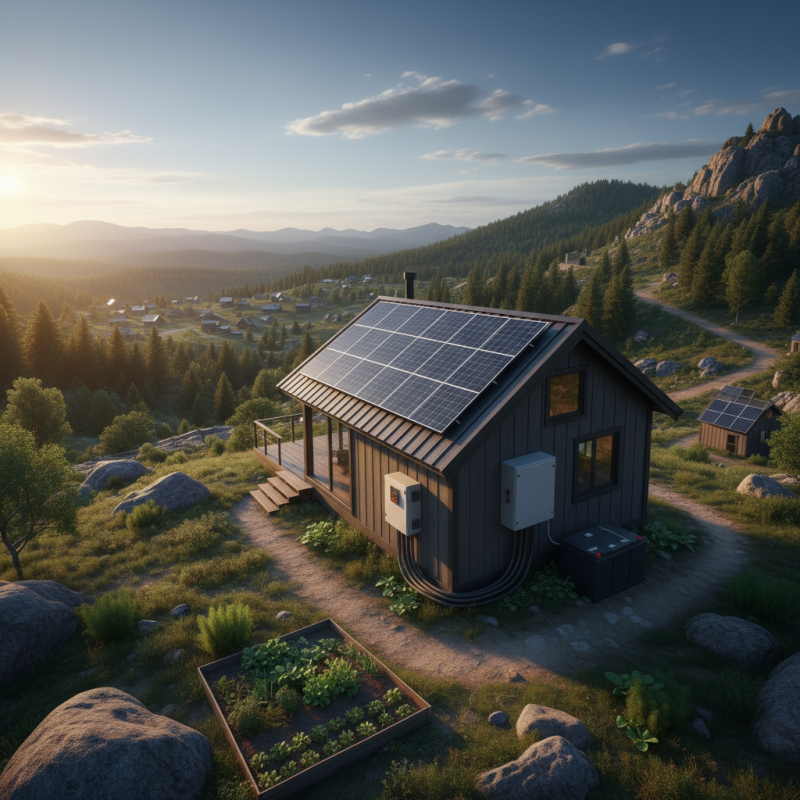
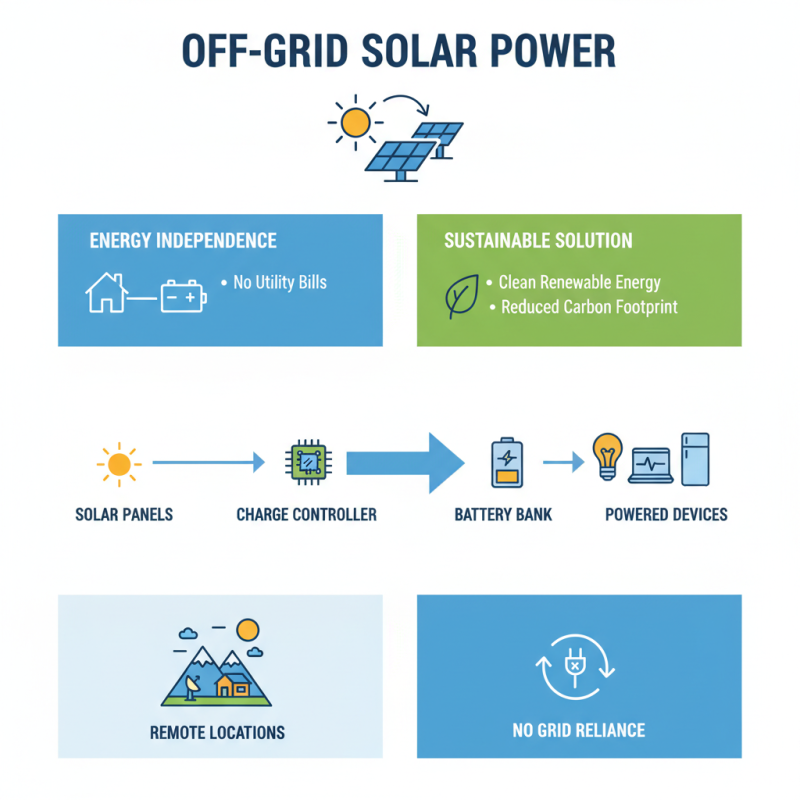
Off-grid solar power systems stand as a sustainable solution for energy independence. These systems allow individuals and communities to generate electricity without relying on traditional utility grids. They harness sunlight through solar panels and convert it into usable energy. This flexibility helps in remote locations where grid access is limited.
Many people find these systems appealing due to their potential savings. Without monthly utility bills, users can save money over time. The initial investment can be high, but ongoing costs tend to be much lower. However, one must consider the energy needs and system size carefully. Misjudgment can lead to insufficient energy supply, especially during cloudy days or winter months.
Maintenance is another aspect that requires attention. Solar panels can accumulate dust and debris, reducing efficiency. Regular cleaning is essential. Additionally, battery storage management can be tricky. Proper care ensures reliability but requires commitment. Users might experience challenges as they adapt to new energy management habits.
Key Advantages of Off Grid Solar Power
Off-grid solar power systems offer numerous advantages for homeowners and businesses. One key benefit is energy independence. Users can generate their own electricity, reducing reliance on utility companies. According to the Solar Energy Industries Association, off-grid installations can provide sustainable energy for remote areas. This is especially beneficial where grid access is limited or unreliable.
Another significant advantage is cost savings. While the initial investment may be high, the long-term savings can be impressive. A study from the National Renewable Energy Laboratory states that off-grid solar can save consumers up to 60% on their electricity bills over the system's lifespan. Moreover, these systems require minimal maintenance compared to traditional energy sources.
Tips for those considering off-grid solar: Start by assessing your energy needs. Understand your consumption patterns before sizing your system. Also, consider local incentives or tax credits. These could significantly offset your initial costs and enhance the return on investment. Analyze potential drawbacks, like battery storage limitations and initial costs. Reflecting on these aspects can lead to a more informed decision.
Economic Benefits of Off Grid Solar Solutions
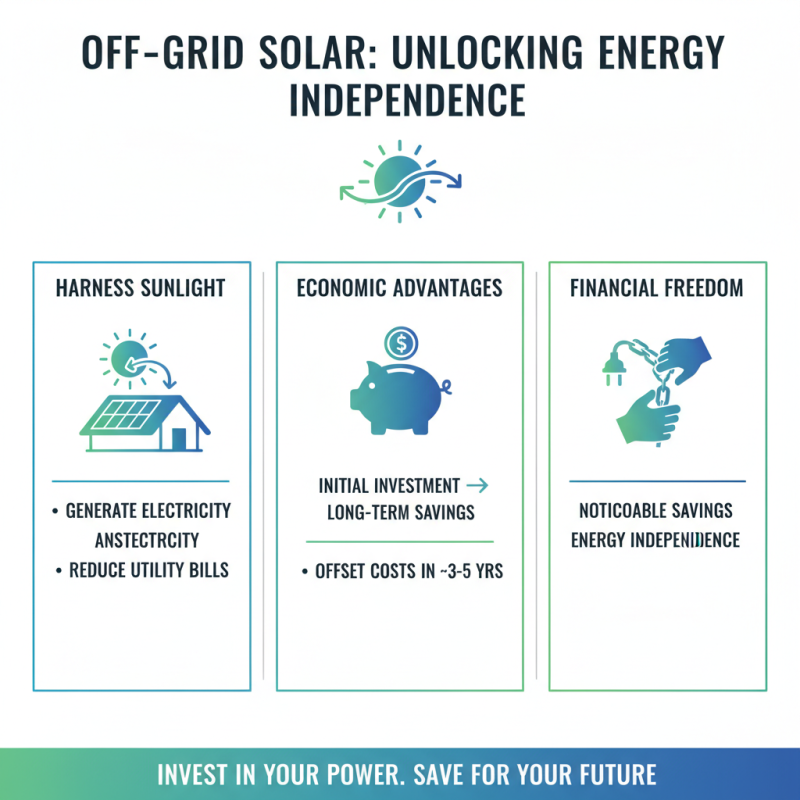
Off-grid solar power systems offer significant economic advantages for those seeking energy independence. These systems harness sunlight to generate electricity, which can drastically cut monthly utility bills. Many homeowners find that initial installation costs are offset by long-term savings. After a few years, the reduction in energy costs becomes noticeable.
Investing in off-grid solar can also increase property value. Potential buyers often appreciate eco-friendly features. However, it is essential to consider maintenance costs. Over time, batteries may need replacement, which can become expensive. Not all areas have consistent sunlight, so energy needs must be carefully planned.
Financing options are attractive. Some programs provide incentives for going solar. This makes it easier for individuals to adopt this technology. Yet, individuals should analyze their energy consumption. It’s vital to ensure that the system will meet their specific needs. Balancing these factors offers a clearer picture of overall costs and savings.
Environmental Impact of Off Grid Solar Energy
The environmental impact of off-grid solar energy is significant and multifaceted. Off-grid systems reduce reliance on fossil fuels, lowering greenhouse gas emissions. According to the International Energy Agency, solar energy can reduce carbon footprints by nearly 80% compared to traditional energy sources. This shift is vital in our fight against climate change.
Using solar panels helps to conserve water. Traditional energy production often requires large amounts of water for cooling and maintenance. In contrast, solar energy systems utilize minimal water. A report by the National Renewable Energy Laboratory indicates that solar systems use 90% less water than conventional power generation methods.
However, there are challenges involved. Solar panel production can involve hazardous materials. Being aware of end-of-life disposal is essential. Recycling and proper waste management should be prioritized. Additionally, while solar energy is renewable, it is not always available. Energy storage solutions are necessary to ensure consistent power. Addressing these issues is crucial for sustainable development.
Choosing the Right Off Grid Solar System for Your Needs
Choosing the right off-grid solar system can be overwhelming. There are many factors to consider. Start by assessing your power needs. Calculate how much energy you use daily. This will help determine the size of the system required.
Next, think about your location. Are you in a sunny area? Solar panels work best in direct sunlight. If you live in a region with many cloudy days, you might need additional storage. Battery capacity is crucial. Don't underestimate how much energy storage you might need.
Lastly, consider your budget. Off-grid solar systems can vary widely in price. Cheaper systems may save money upfront, but they might lack efficiency. Investing in quality components could save you money in the long run. Reflect on your long-term energy goals. Sometimes, it’s worth spending more for greater reliability.
What Are the Benefits of Off Grid Solar Power Systems?
| Benefit |
Description |
Impact |
| Energy Independence |
Produces your own energy, less reliance on public utilities. |
Reduces energy costs and increases self-sufficiency. |
| Environmental Benefits |
Utilizes renewable energy, reducing carbon footprint. |
Contributes to a healthier planet. |
| Cost Savings |
Low ongoing costs once system is installed, minimal maintenance. |
Significant long-term savings on energy expenses. |
| Off-Grid Living |
Allows for remote living without grid access. |
Ideal for those seeking to live sustainably in remote areas. |
| Increased Property Value |
Renewable energy systems can increase home value. |
Attractive feature for eco-conscious buyers. |